

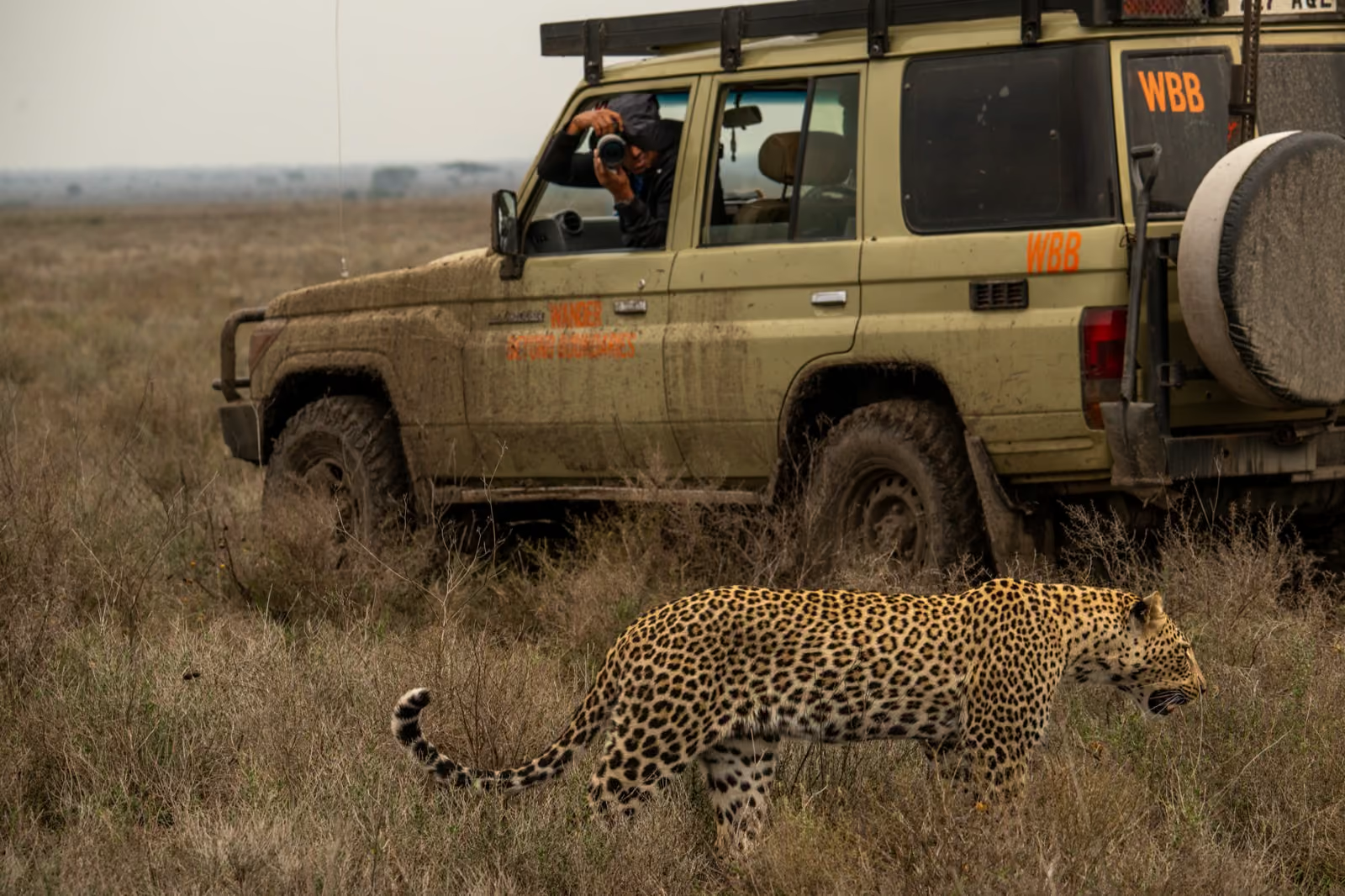
Kenya & Tanzania
The whole ecosystem, from the Mara’s resident prides to the Serengeti herds.
- Length
- 9 nights · 10 days
- Where
- Kenya and Tanzania, overland from Nairobi
- Guiding
- A team of three, led by Nidhi, in two Land Cruisers
The Mara and the Serengeti are one ecosystem, and you only see why when you cross it: the highlands that shape the rain, the plains the herds move across, the rivers they cross, the resident prides of the Mara at the end of it. Along the way you meet the people of the land as well, the Hadzabe and Datooga at Lake Eyasi and the Maasai in the Mara, because the wildlife has never existed apart from them. It is the right trip for anyone who wants culture and people as well as animals.
It runs overland throughout, Nairobi to Nairobi, and it needs the full ten days. The distances are real, and we won’t run it shorter.
The route
Every place you stop or sleep, at its real coordinates. Solid lines are driven.
Day by day
- Day01
Nairobi → Namanga → Karatu
We receive you early in Nairobi and drive south to the Namanga border, through immigration and on into Tanzania. On a clear day, with luck, Kilimanjaro shows itself in the distance. We reach Karatu by evening.
Overnight Karatu
- Day02
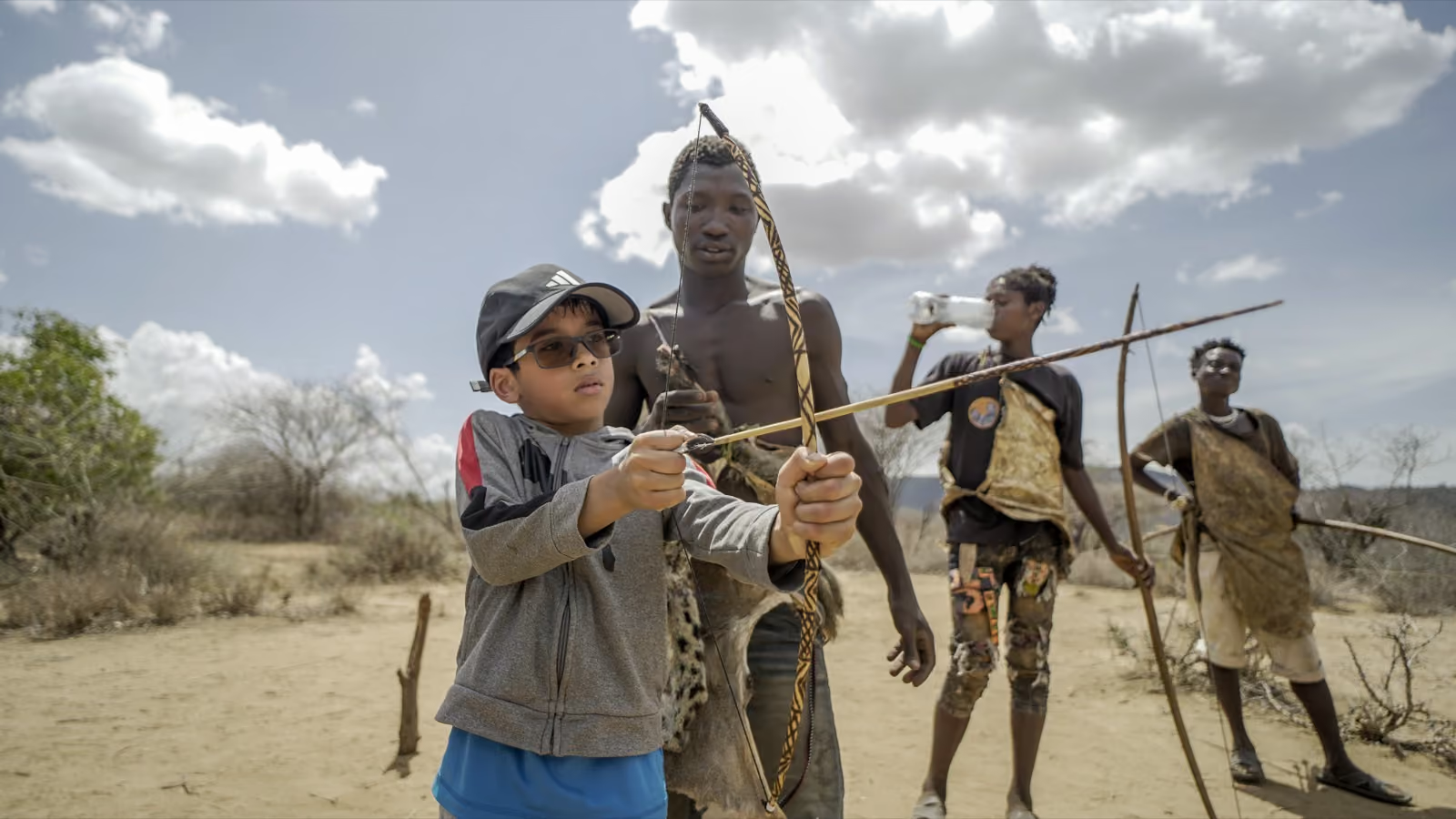
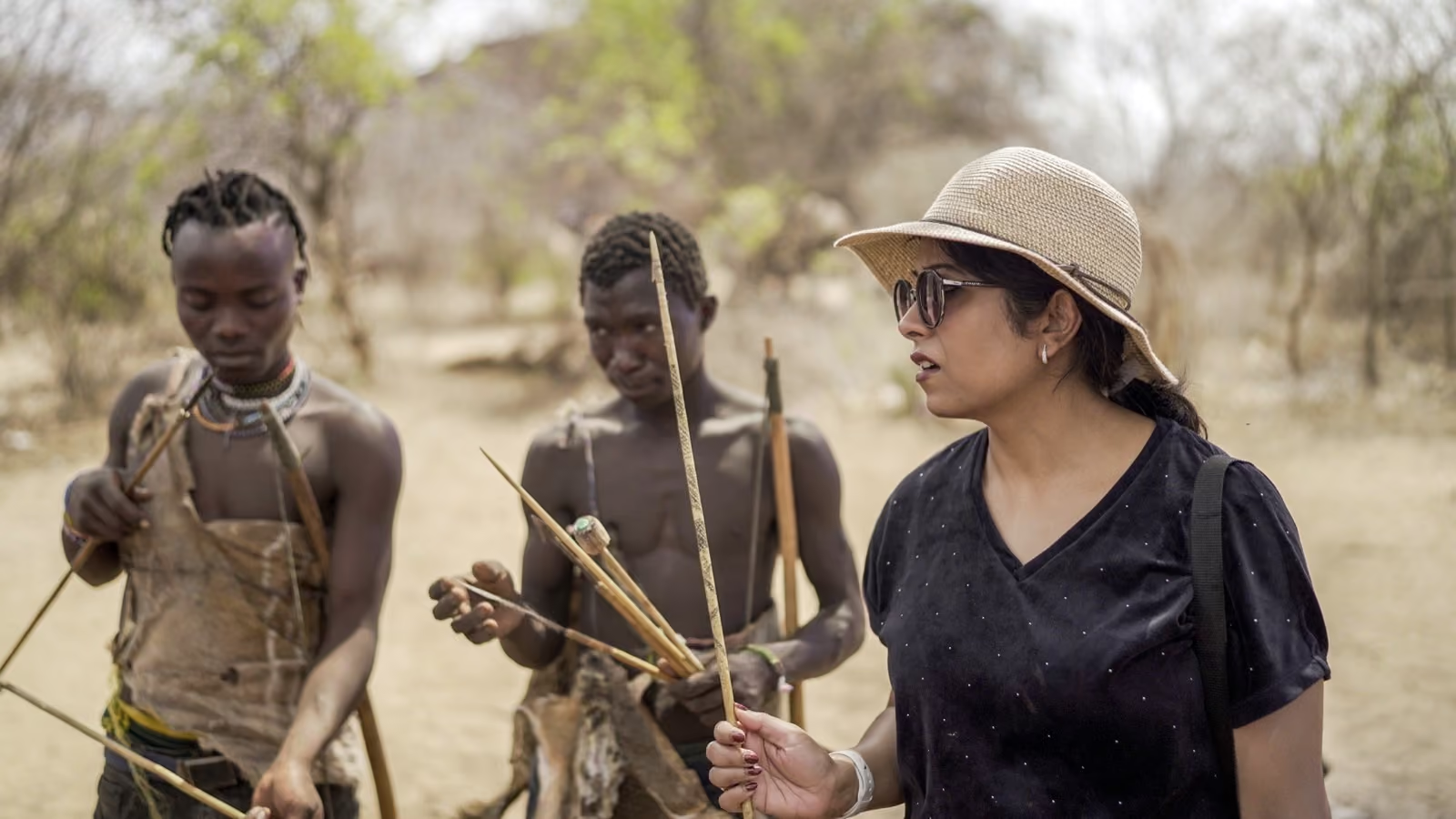
Lake Eyasi: the Hadzabe and the Datooga
A morning with the Hadzabe, among the last hunter-gatherers in East Africa, who read tracks and seasons the way our guides try to. Then the Datooga, pastoralists and blacksmiths. We visit to listen and learn, with no staged performances. Back to Karatu by evening.
Overnight Karatu
- Day03
Ngorongoro highlands → Olduvai Gorge → Serengeti
Through the Ngorongoro Conservation Area, stopping at the crater viewpoints, and on to Olduvai Gorge, which holds some of the most important evidence of early humans and the rise of walking upright. We don’t drive down into the crater: it is costly, small and crowded with vehicles, and you will meet the same animals in the open Serengeti. Into the Serengeti for your first night in the bush.
Overnight Serengeti
- Days04–06
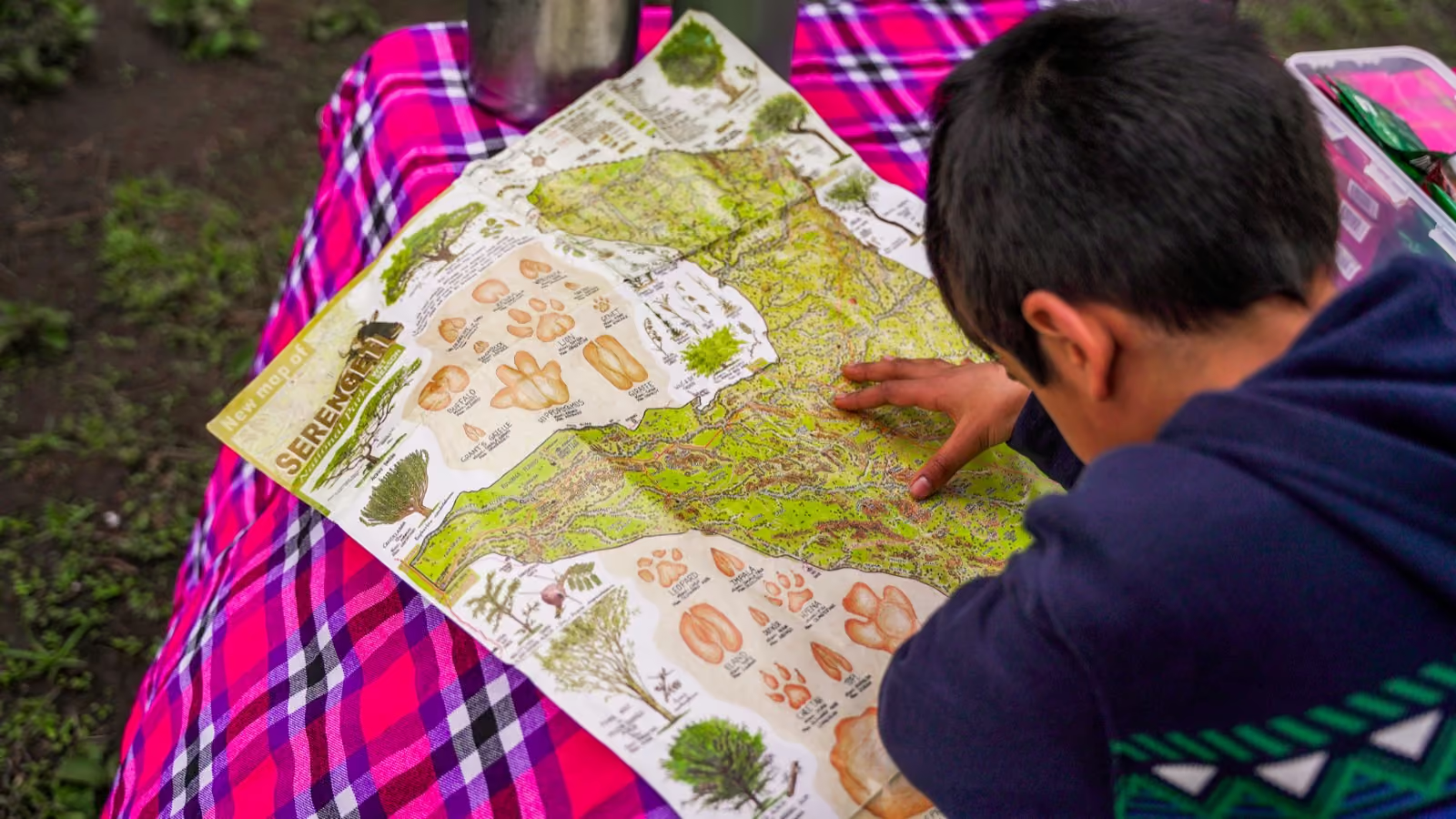
The Serengeti, placed where the herds are
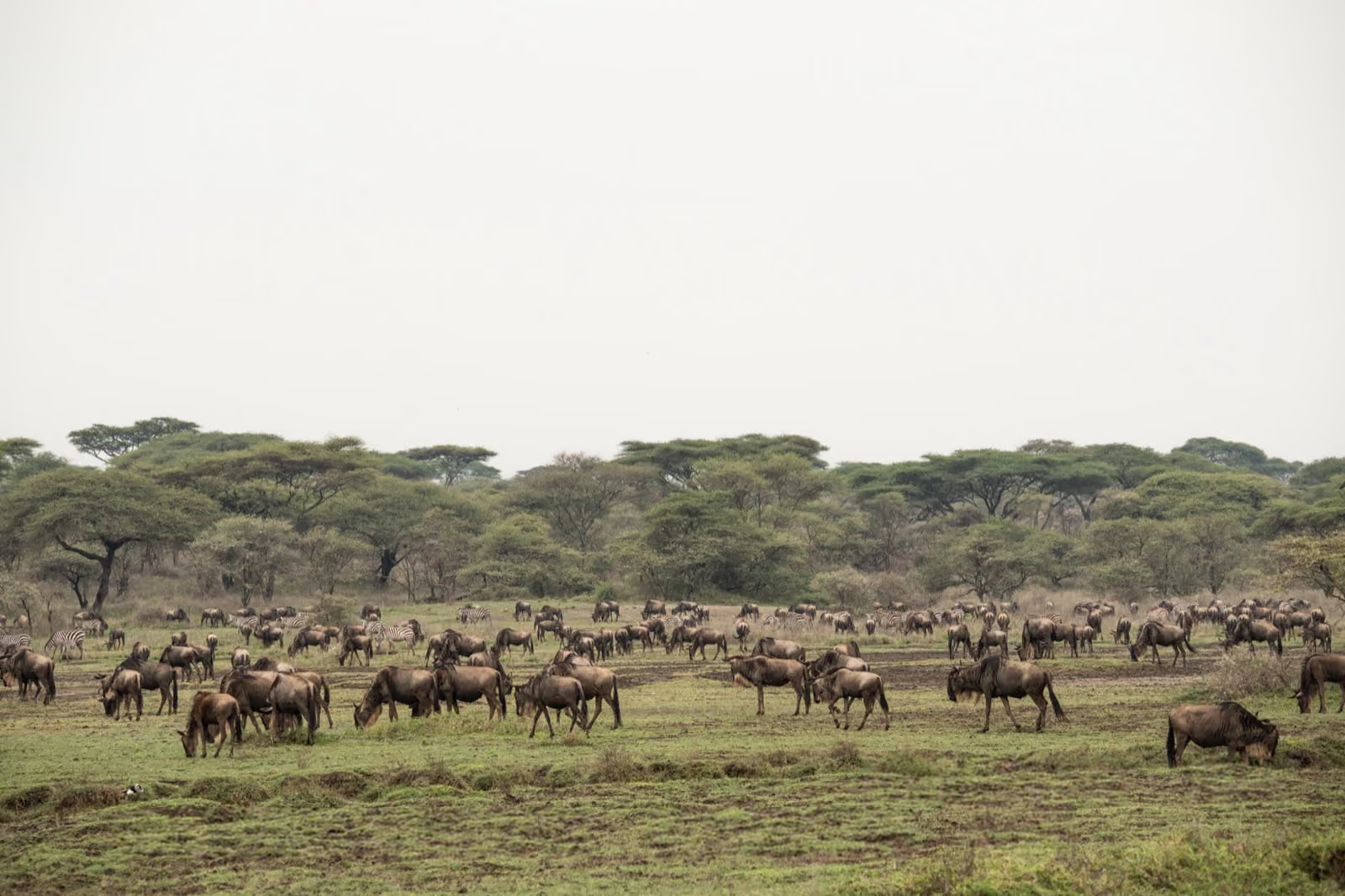
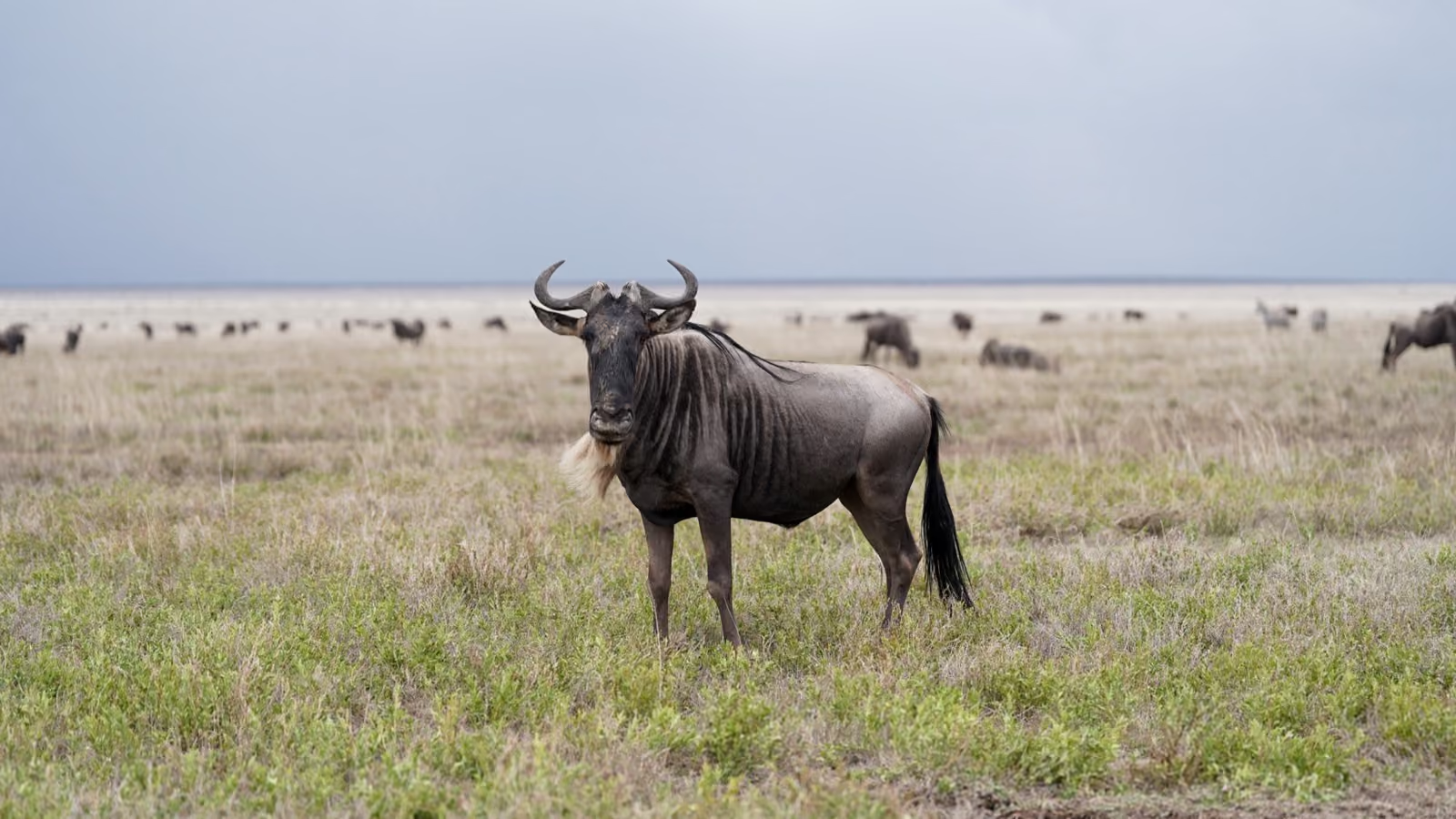
Full days in the field, with breakfast and lunch carried out to the plains. We don’t lock camps in advance; we place you where the animals are that month. December to March, that is the calving plains around Ndutu. April to June, the central and western Serengeti. July to November, the central Serengeti for the big cats and the north for the herds. On these days you’re welcome to take the wheel of one of our two radio-linked Land Cruisers, with a guide beside you.
Overnight Serengeti, positioned to the season
- Day07
Into the Maasai Mara
North out of the Serengeti, across the border at Isebania and into the Maasai Mara, reaching camp by evening.
Overnight Enchipai Mara
- Days08–09
Full days in the Mara Triangle
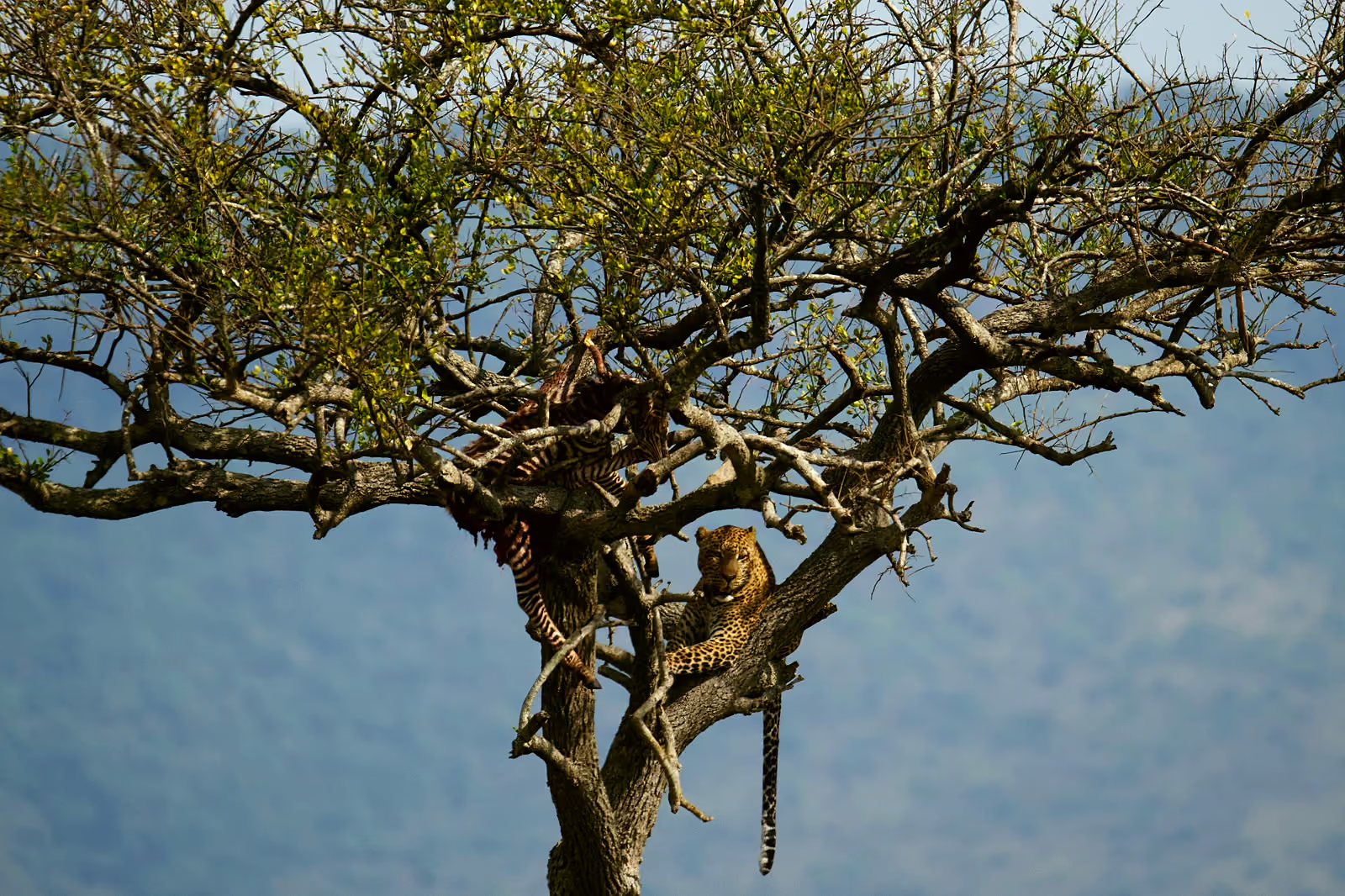
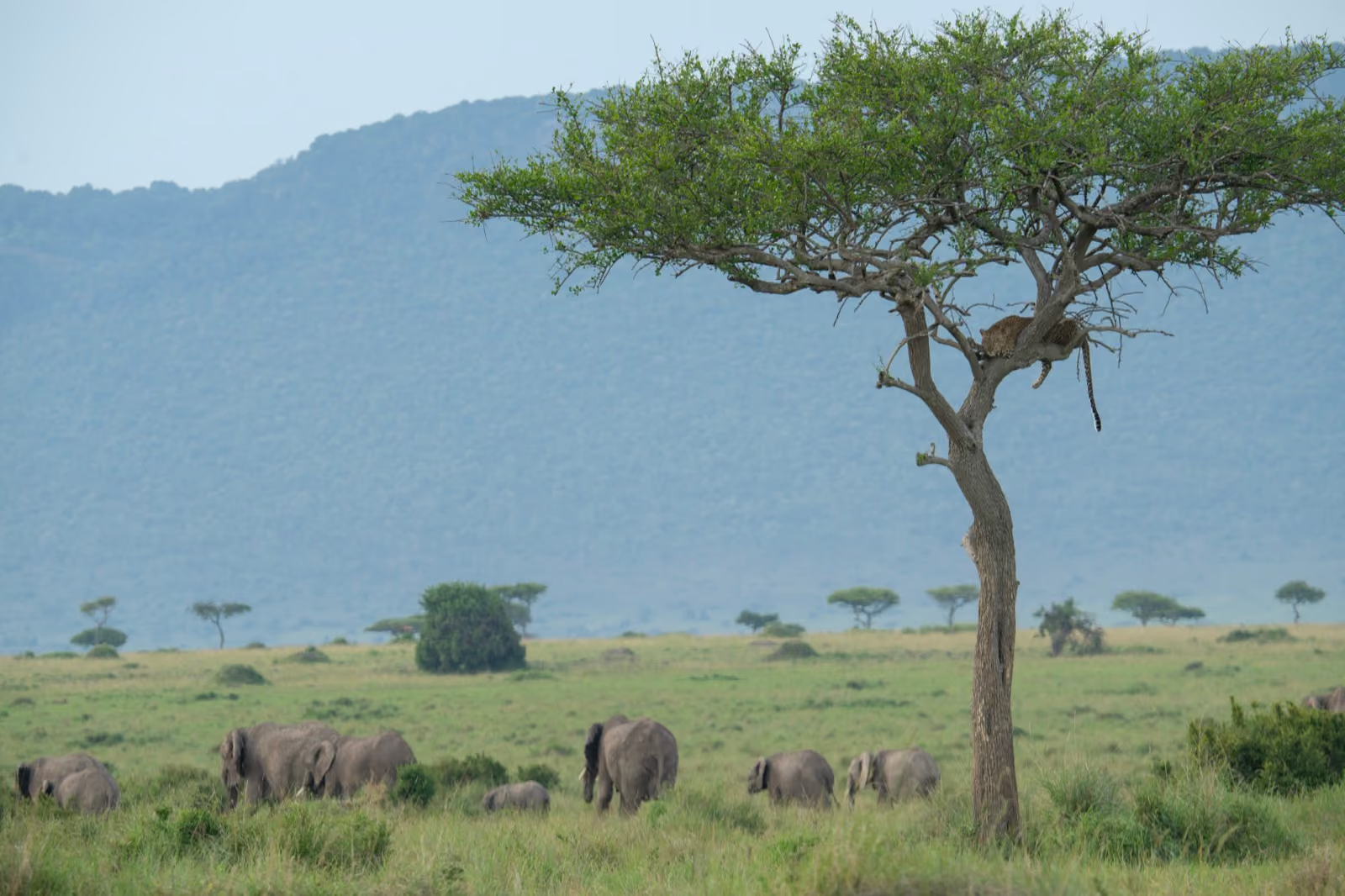
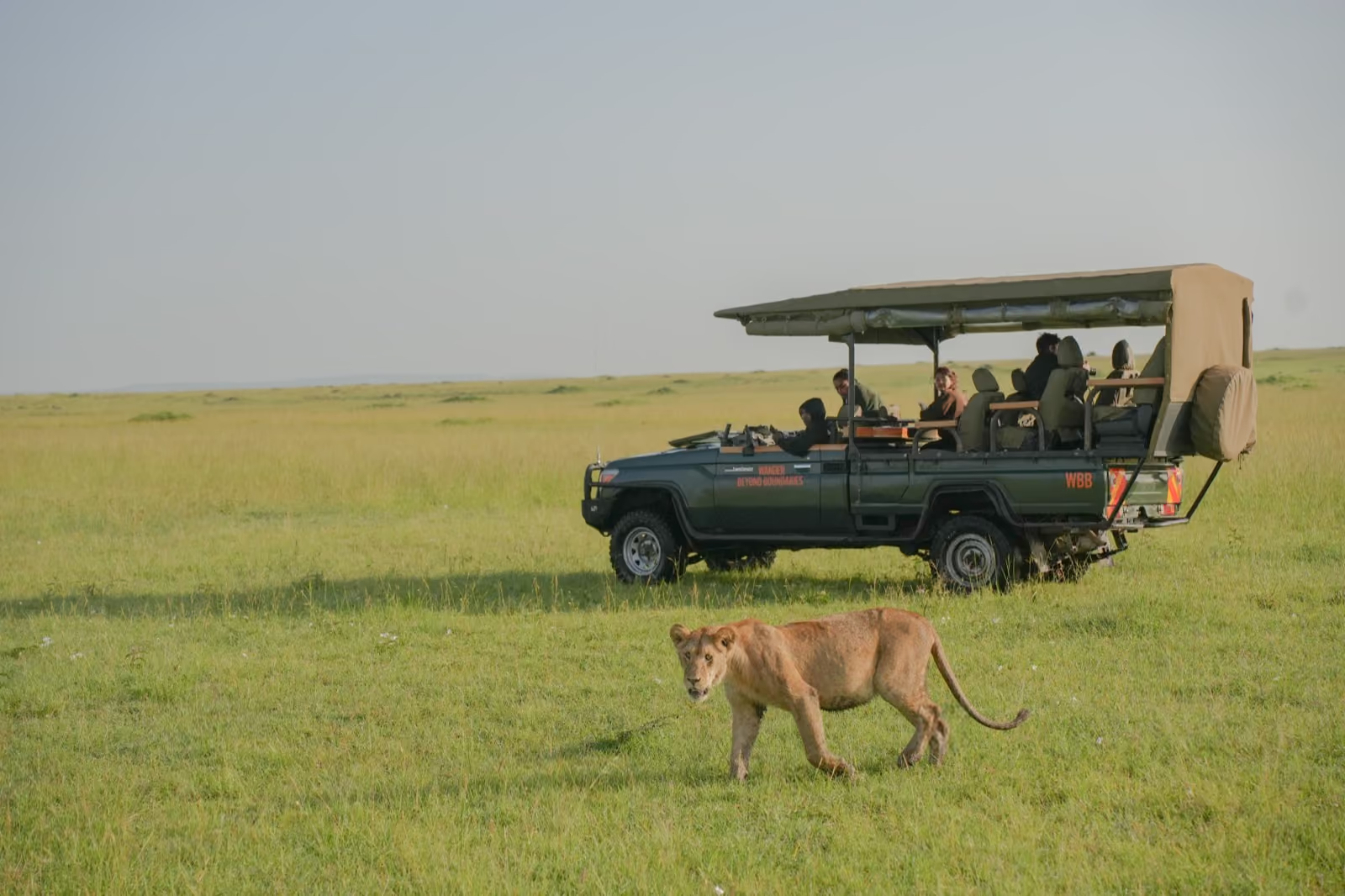
The Mara is smaller and tighter than the Serengeti, and rich in resident cats. Two full days in the Triangle in our open game viewer, ending with a visit to a Maasai boma, an acknowledgement of the people whose land the reserve once was.
Overnight Enchipai Mara
- Day10
Back to Nairobi
The drive back to Nairobi. We drop you at the airport for a flight after 9 pm, or at your hotel if you fly the next day.
Heading to Zanzibar afterwards? We run the journey the other way round, starting in the Mara and ending in Arusha for your flight to the island.
Where you’ll stay
The camps on this safari: your tent, the deck and the shared spaces.
All-inclusive, end to end
From the moment we receive you until we drop you back:
- Reception at the airport, and every transfer on the itinerary
- All nights in camp, with all meals
- Bush breakfast and lunch on full days in the field
- Your private vehicle and guiding team throughout
- Park and conservation fees
- Cultural visits on the itinerary
- Binoculars in each vehicle, and first aid on hand
On this safari it also includes the Hadzabe and Datooga visit at Lake Eyasi, and the Maasai boma visit.
You won’t spend a penny unless you choose to: drinks at camp, laundry or shopping.
Not included
- Your international flights
- Visas and the Kenya eTA. You can apply yourself, or we can process them for you.
- Travel insurance, now mandatory for Kenya and for Tanzania
- A hotel night in Nairobi or Arusha, if your flight home is the next day
You’ll also need a yellow fever vaccination.
What it costs
Per person, in US dollars, sharing a room or tent.
| Trips starting | 2 travellers | 4 or more |
|---|---|---|
| 6 Jan – 15 Jun · 1 Oct – 15 Dec | USD 7,200per person | USD 6,500per person |
| 16 Jun – 30 Sep · 16 Dec – 5 Jan | USD 8,200per person | USD 7,000per person |
Rates follow the camps’ and the park authorities’ own calendars. The wildlife is there every month.
Questions people ask first.
What does all-inclusive mean?
Everything from the moment we receive you until we drop you back: transfers, camps, all meals, park fees, your private vehicle and guiding team. You won’t spend a penny unless you choose to, on drinks at camp or shopping. The only things outside the price are your flights, visas (including the Kenya eTA) and travel insurance, which is now mandatory for Kenya. We can process visas for you if you’d like.
Is the safari private?
Always. The vehicle and the guiding team are yours alone, and we never put separate parties together. That is what lets us stay with a sighting for as long as it takes.
Who are the guides?
Every safari has a guiding team of at least two: a senior guide and one or two guides working alongside. Our guides know the resident prides individually, and they read the land as well as the animals: the soil, the grass, the water, and why the animals are where they are.
Kenya, Tanzania, or both?
Kenya is the concentrated safari for fewer days: the Mara is compact, rich in resident cats, and easy to reach from Nairobi. Tanzania is the bigger, wilder one, where the guiding matters most and the ecological story is fuller. Together they make one ecosystem, and our Kenya & Tanzania journey covers the whole of it.
When is the best time to come?
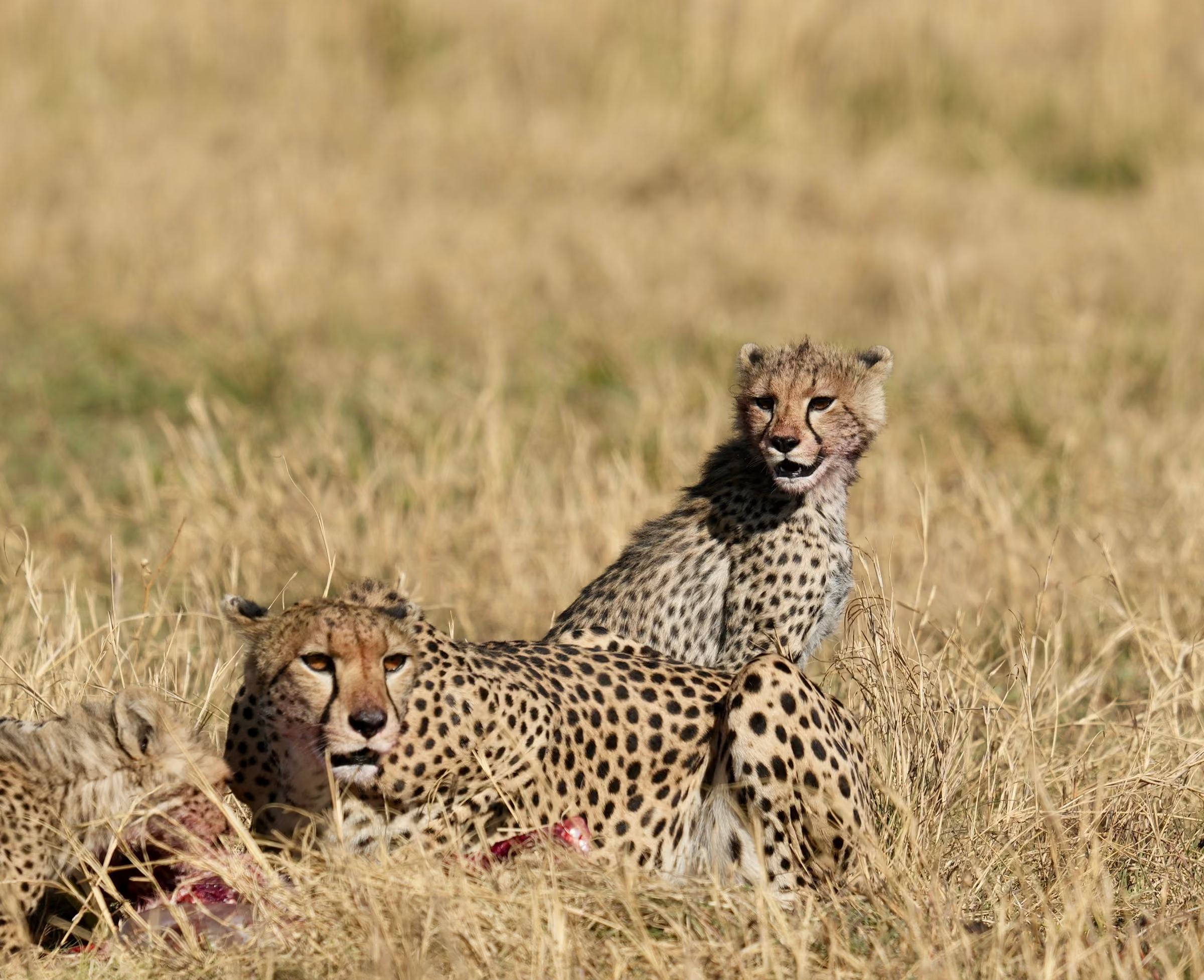
Every month has something happening. The lion prides, cheetah, leopard and elephant of the Mara live there all year. The herds are always somewhere on their long loop through the Serengeti and the Mara, so we plan around where they will be. See When to come for the year, month by month.
Can I drive?
In the Serengeti, yes. We run two of our own Land Cruisers there, linked by radio, and you’re welcome to drive one with a guide beside you. Hand it back whenever you’d rather sit back and watch. In the Maasai Mara our guides drive the open game viewer, so everyone’s eyes are free for the bush.
Can we bring children?
Yes, children of every age come on safari with us, and it is a lovely time to introduce them to animals and their worlds. Children under 5 travel free, 5 to 11 are charged at half, and from 12 it’s the adult rate. That isn’t our choice: the camps charge by bed and the park authorities charge entry by age on the passport, so we pass those on as they are.
What about food?
Vegetarian and Jain meals are catered for regularly, and our camp in the Mara uses only halal meat. Our camps are chosen for where the animals are, not for their kitchens: they’ll happily attempt Indian dishes, but the flavours may not taste quite the way they do at home.
How do I book?
Tell us your dates and who is travelling. We check the camp and the guiding roster, then send you the itinerary and exact costing. To confirm, we need the names as they appear on your passports and an address for the invoice. A 25% advance holds your dates and the balance is due 30 days before you travel; within 30 days, full payment confirms. We invoice in US dollars. Bank transfer is preferred, and a card payment link is available with a 3.5% card fee.