

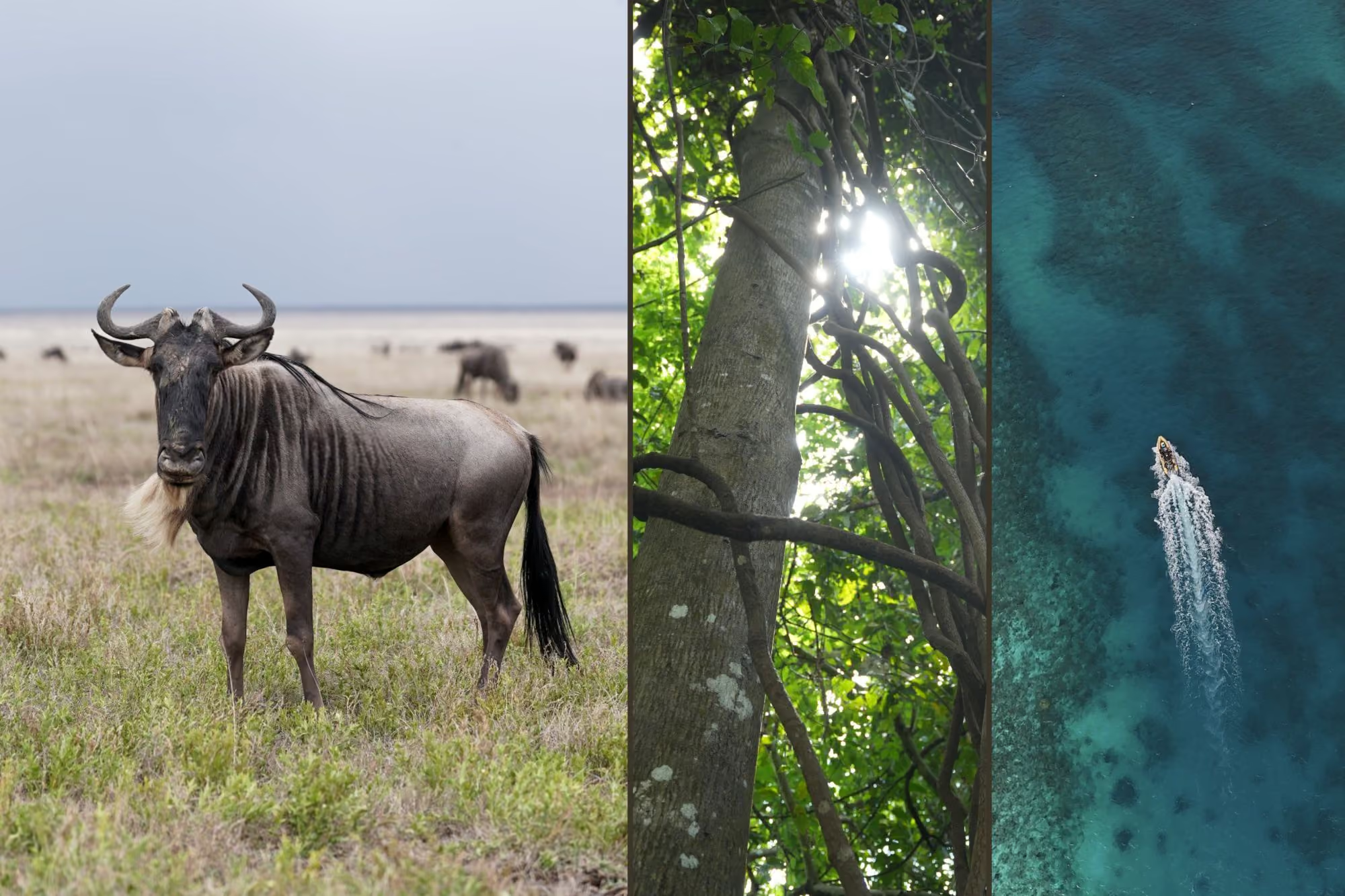
Serengeti & Pemba
Two ecosystems in one trip: the herds on the open plains, then Pemba’s coral reefs, turtles and quiet island days.
- Length
- 9 nights · 10 days
- Where
- Northern Tanzania and Pemba Island, Zanzibar
- Guiding
- A team of two or more on safari; a trusted dive partner in the water
This is one journey, not a safari with a beach added on. The plains teach you to read movement, family and survival; Pemba lets you read the same things underwater. A reef is a landscape too, shaped by current, structure and behaviour. Nidhi is a PADI scuba instructor, and for her it has always been animals on land and animals underwater. On Pemba we bring the same interpretive thread to the reef, mangrove and forest, while the diving itself is run by a trusted dive partner, with proper equipment and safety standards.
The route
Every place you stop or sleep, at its real coordinates. Solid lines are driven, dashed lines are flown.
Day by day
- Day01
Kilimanjaro → Karatu
We receive you at Kilimanjaro International Airport. Land by 3 pm and we drive on to Karatu the same day; land later and we stay near Arusha and set off fresh in the morning.
Overnight Karatu, or near Arusha
- Day02
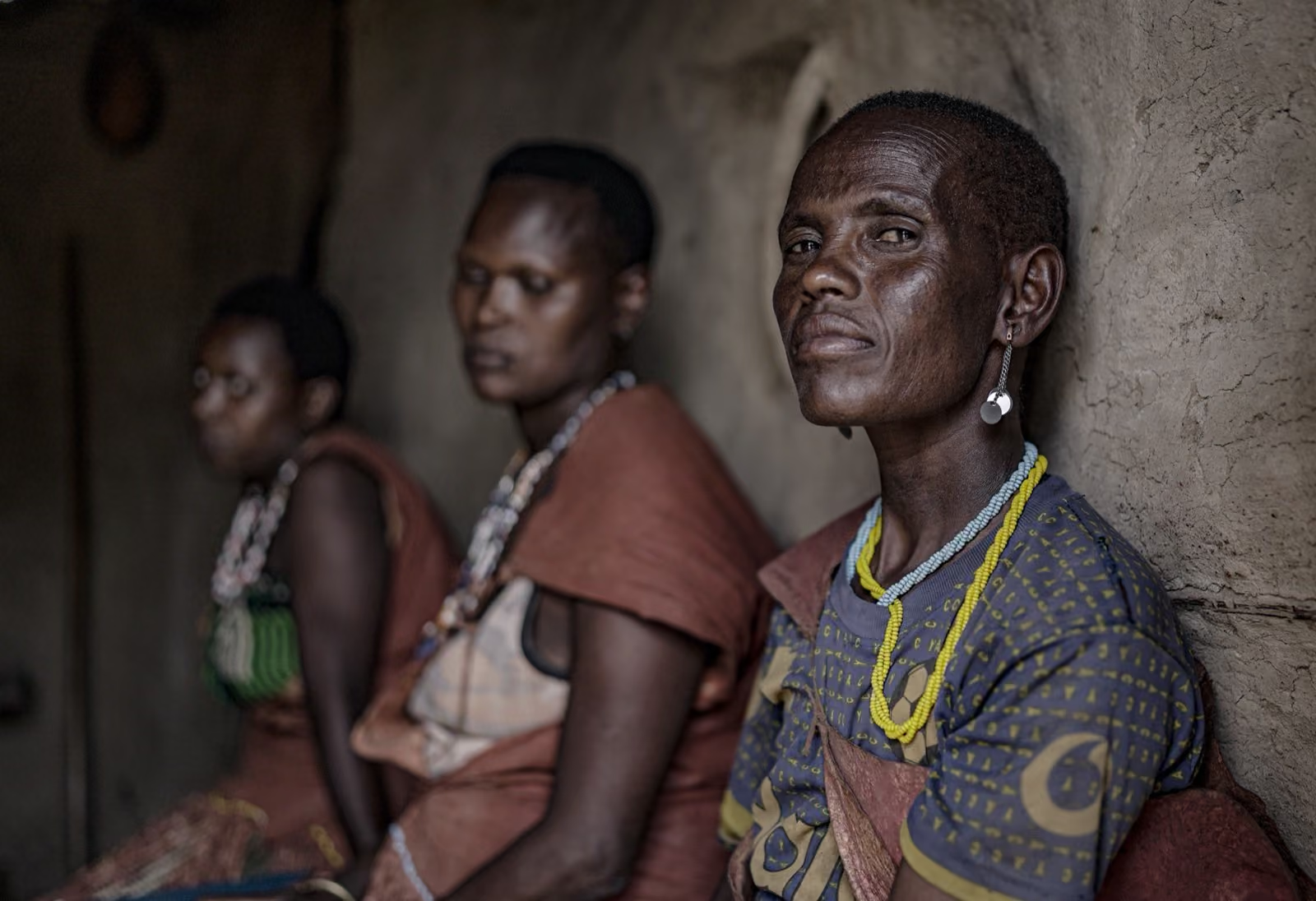
Lake Eyasi: the Hadzabe and the Datooga
A day to listen and learn, with the Hadzabe and the Datooga, about how lives here are shaped by the same land you’ll be reading on safari.
Overnight Karatu
- Day03
Ngorongoro highlands → Olduvai Gorge → Serengeti
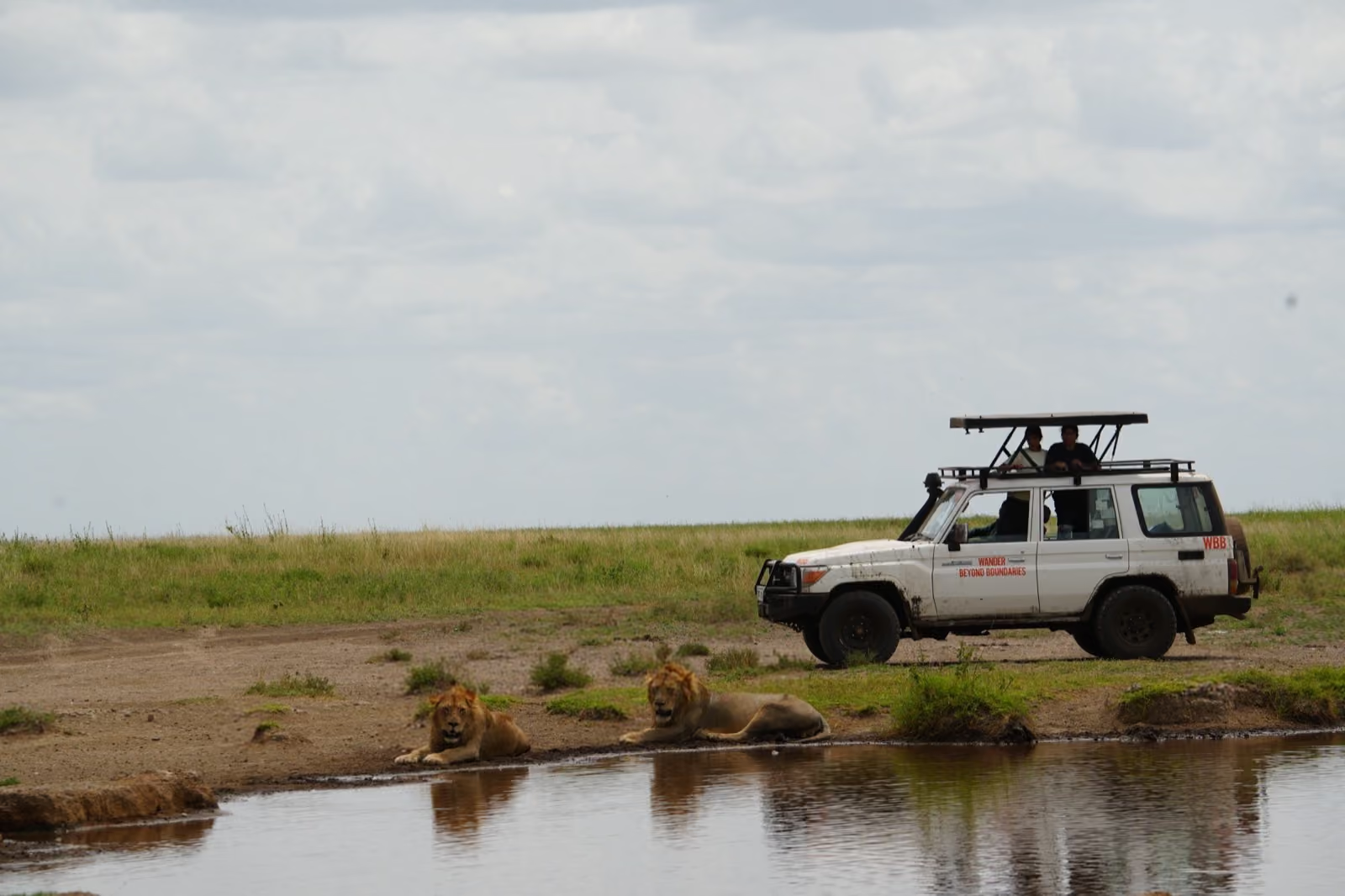
Across the highlands, stopping at the crater viewpoints, past Olduvai Gorge and onto the plains for your first night in the Serengeti.
Overnight Serengeti
- Days04–06
Full days in the Serengeti
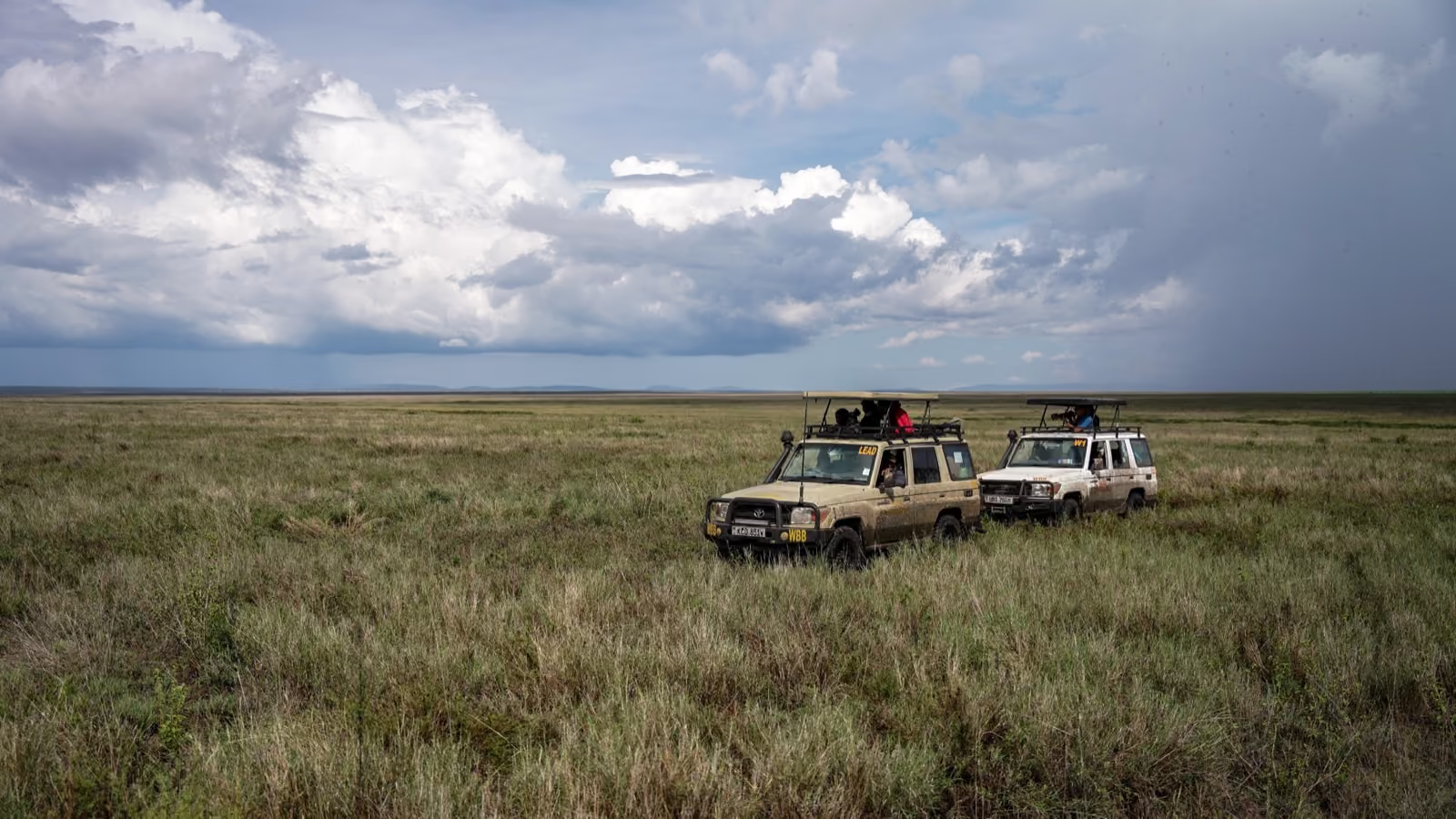
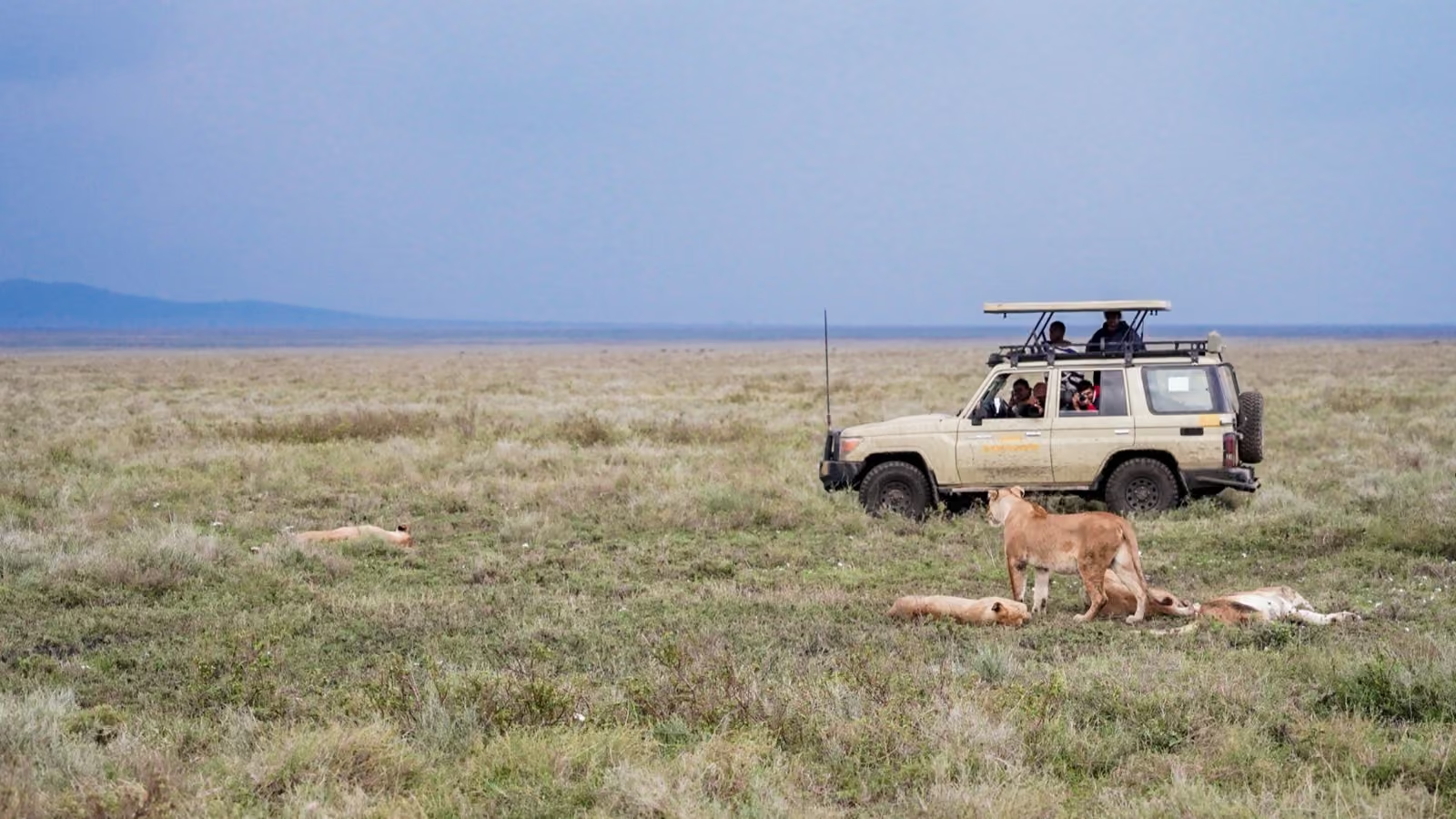
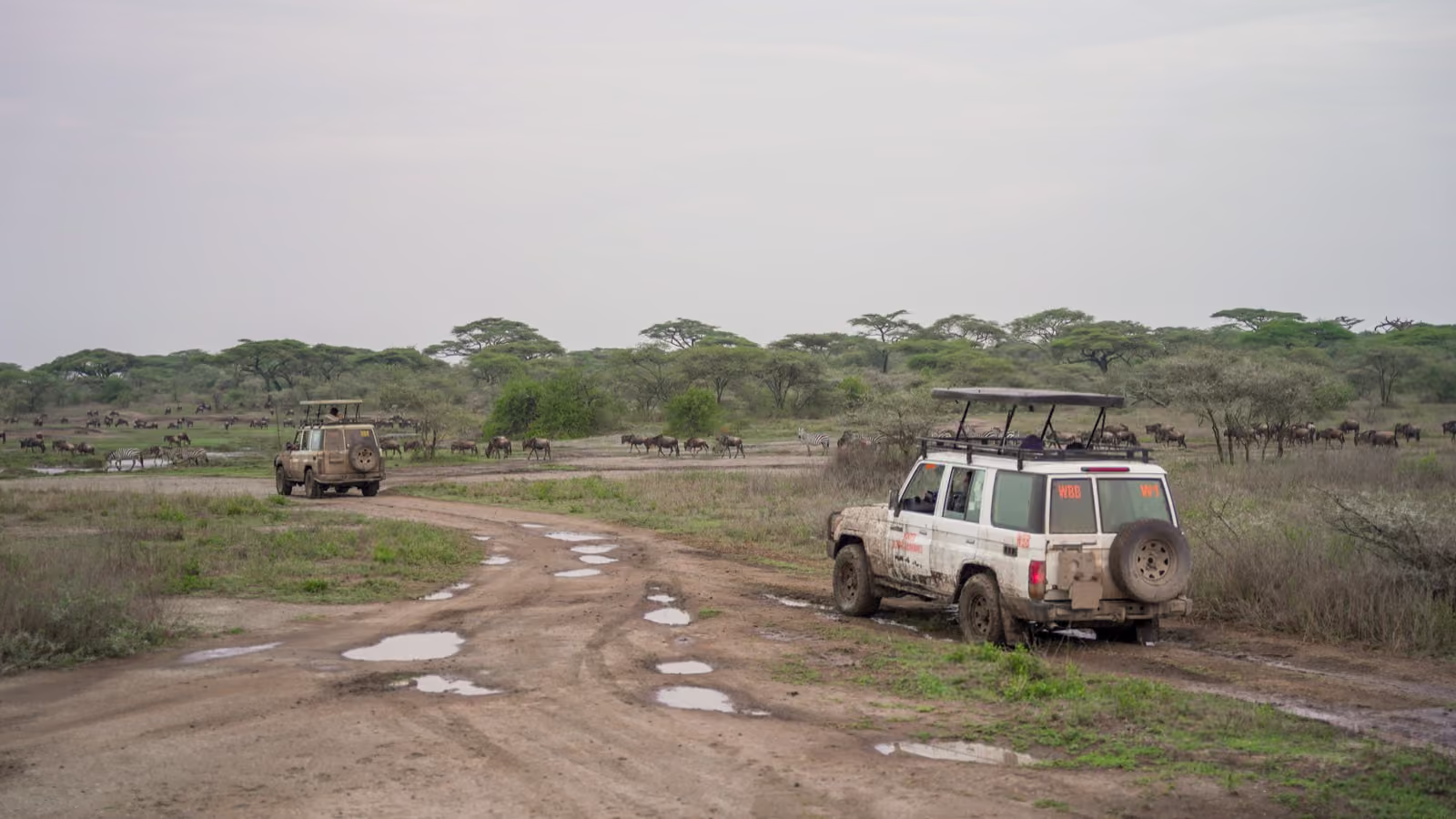
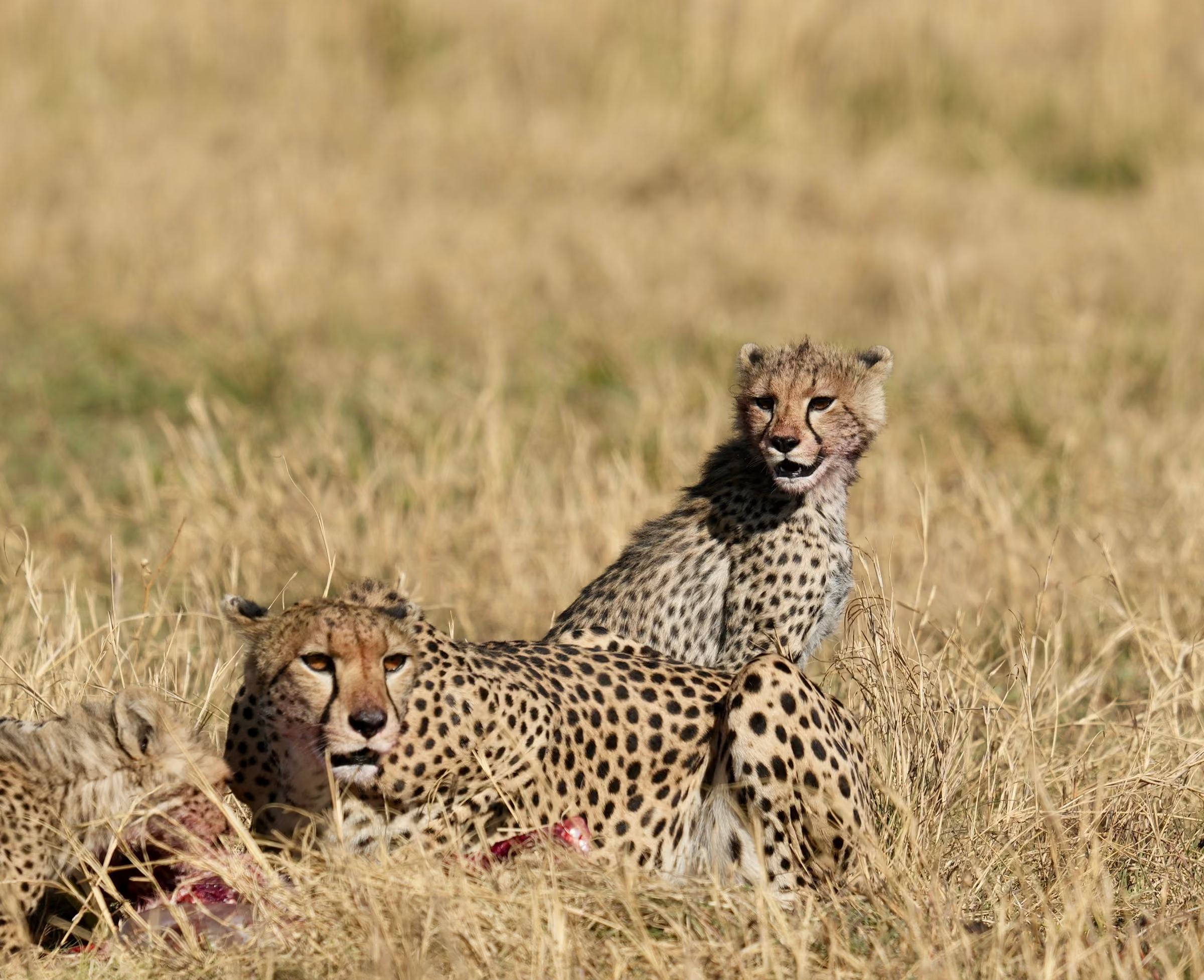
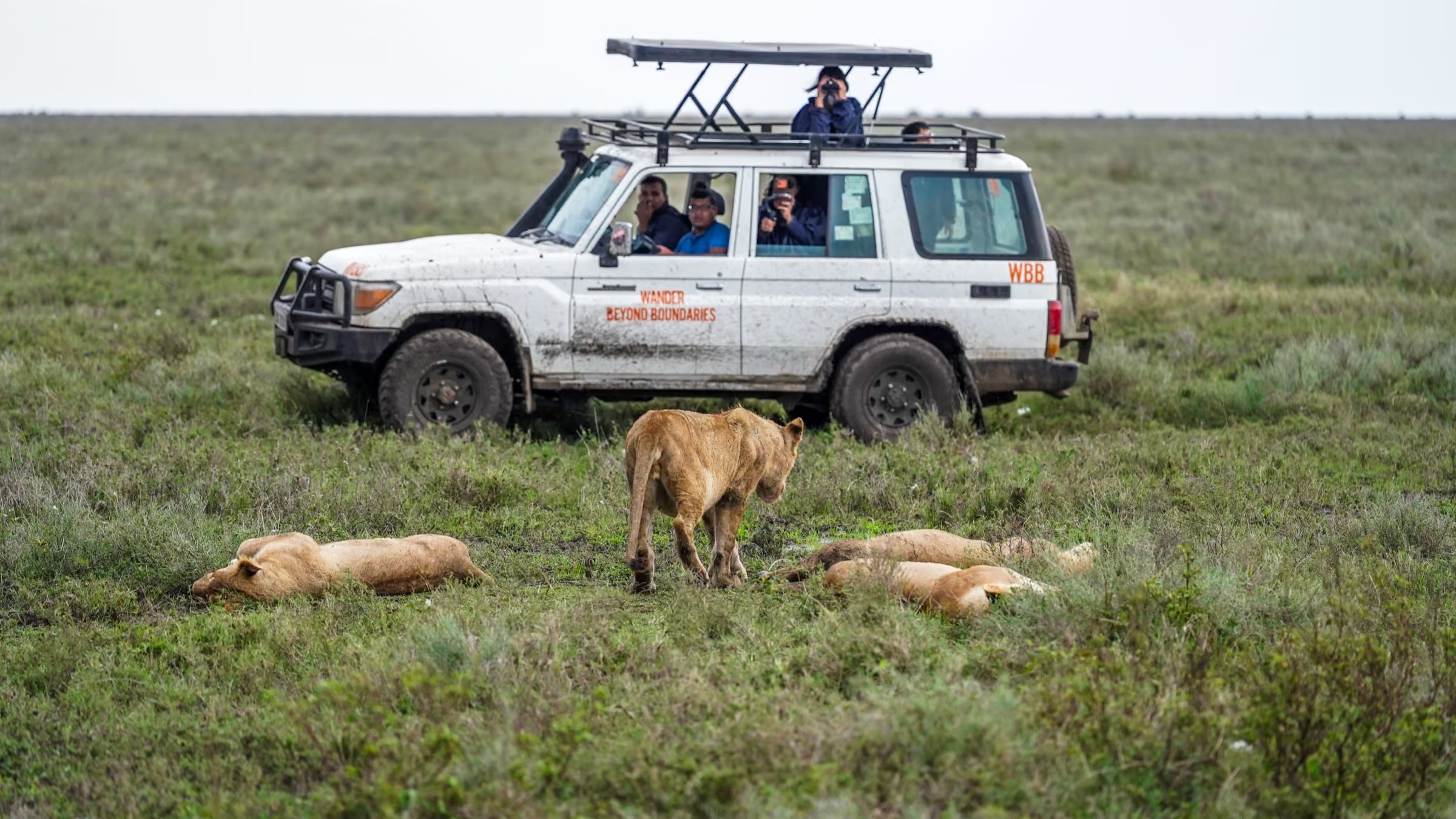
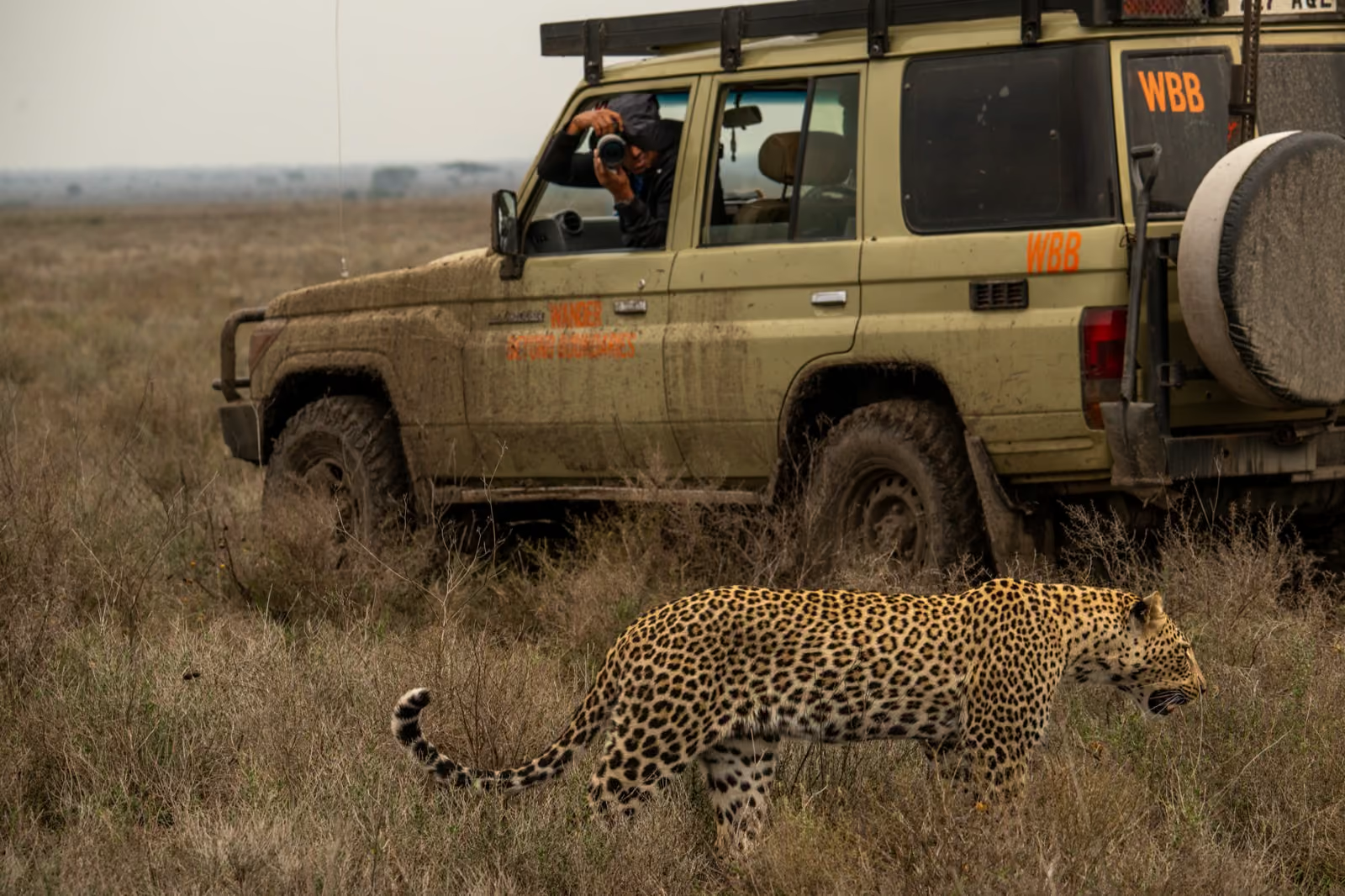
Full days in the field, placed where the herds are that month: Ndutu for the calving from December to March, the central and south-eastern Serengeti from April to June and in November, the north from July to October. You’re welcome to drive one of our two radio-linked Land Cruisers, with a guide beside you.
Overnight Serengeti, positioned to the season
- Day07
Serengeti → Pemba Island, by air
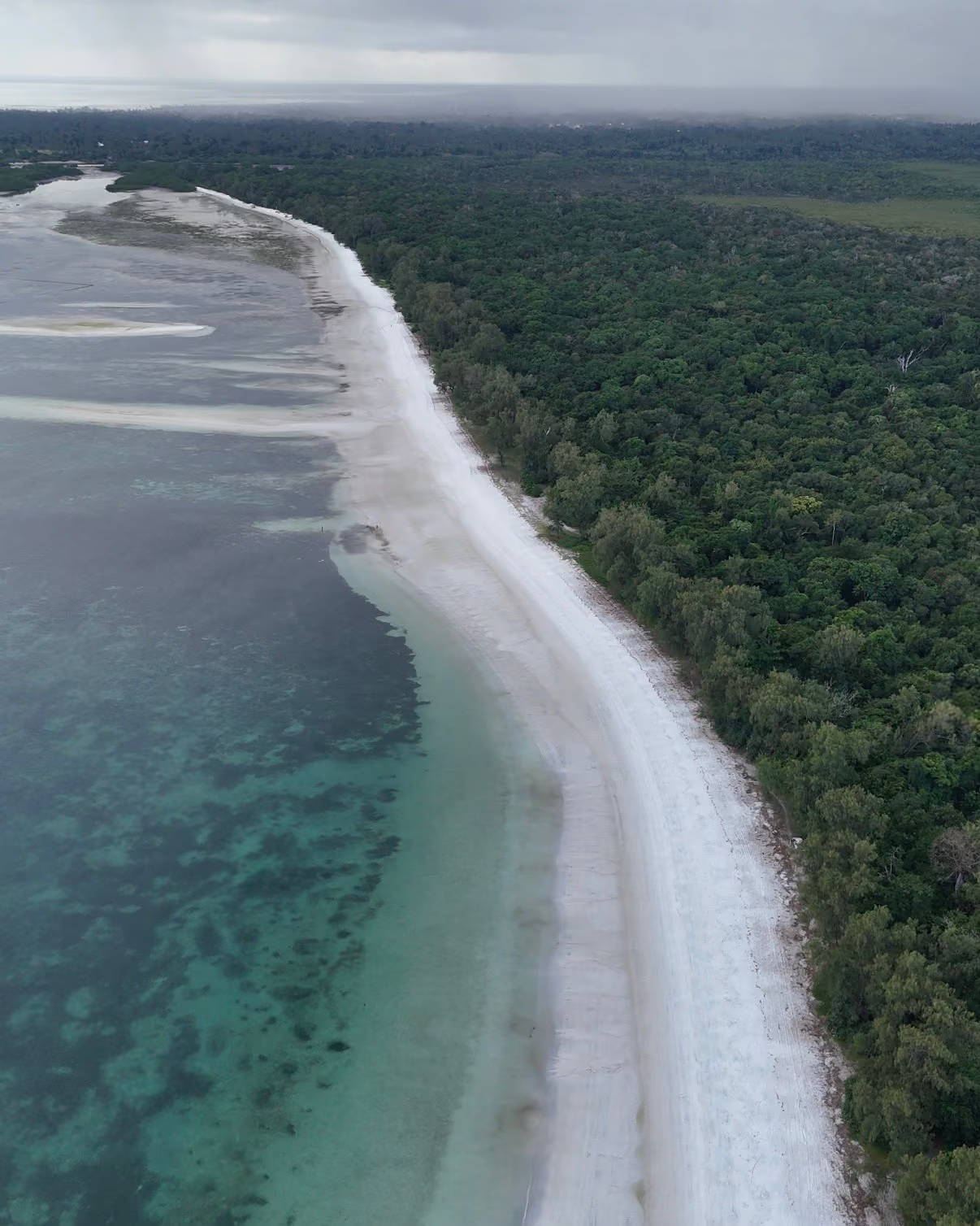
A last drive to the airstrip, then a light aircraft east to Pemba. The dust and gold of the plains give way to clove forest, mangrove channels and the turquoise shallows of the reef.
Overnight Pemba Island
- Day08
Pemba: the reef, your way
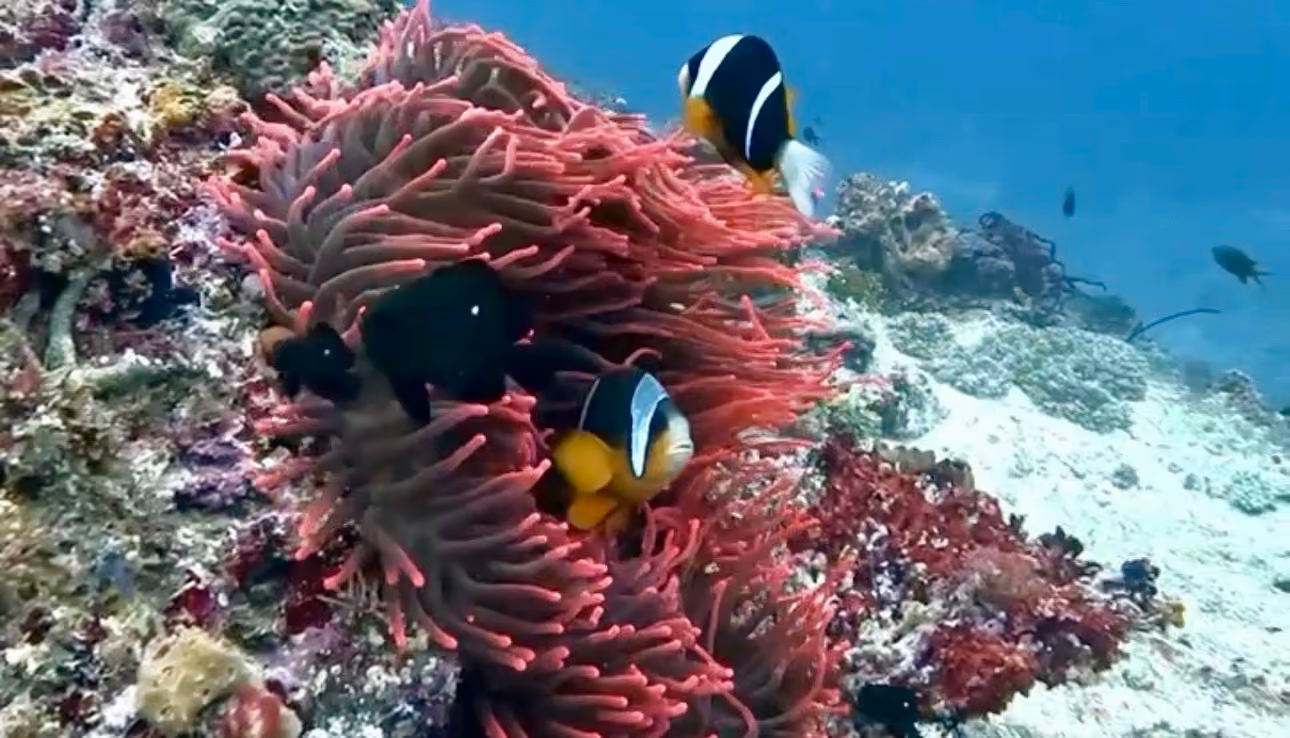
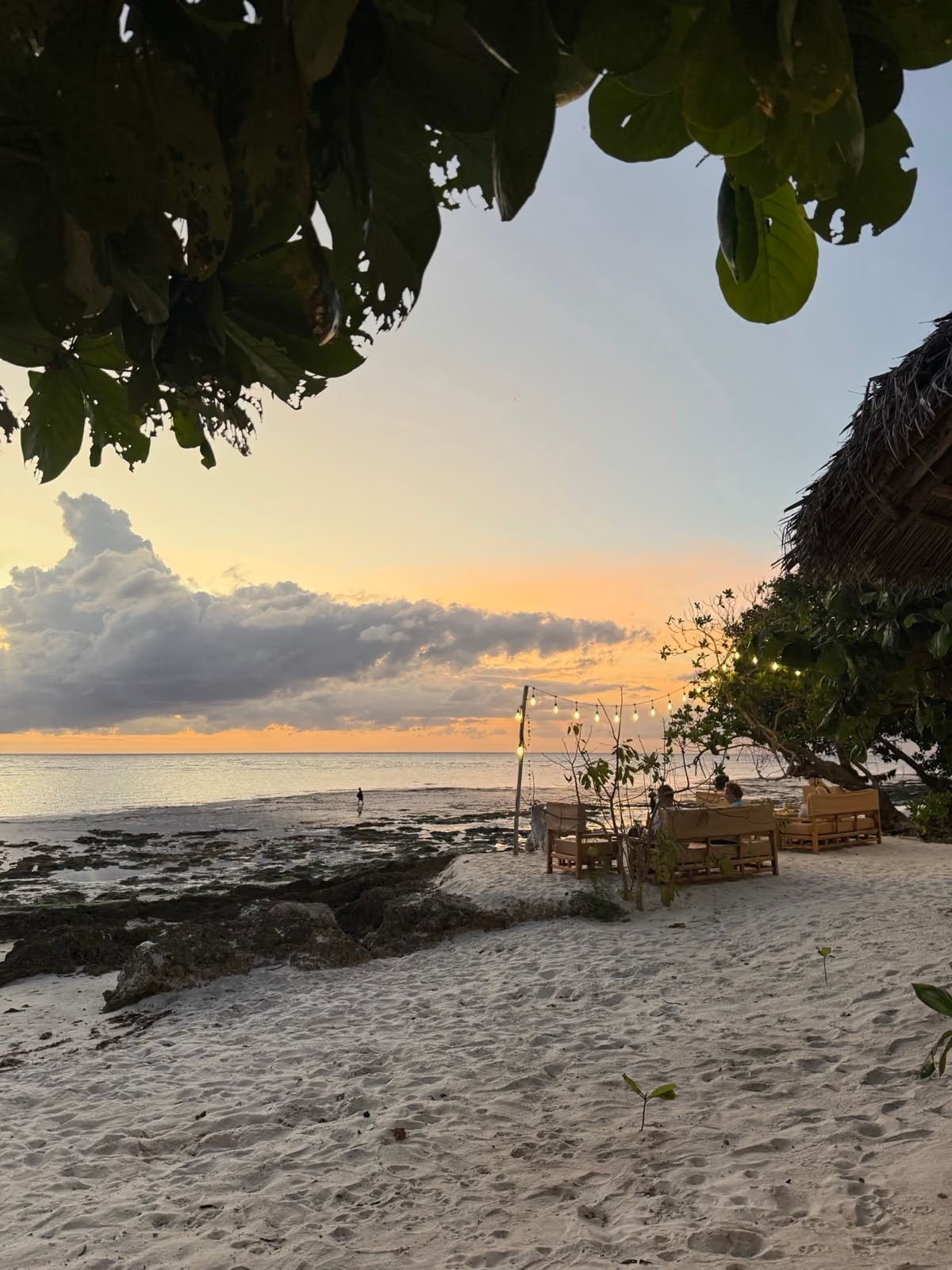
Discover Scuba if you have never dived, a shallow first experience with a qualified instructor and no certification needed. Two guided dives if you are certified, on the walls and drop-offs Pemba’s deep-water edge is known for. Or two guided snorkels over the shallows, watching the cleaning stations and the shoals. All three are included. Pemba is a tidal island, so reef time is planned around the tides.
Overnight Pemba Island
- Day09
Pemba: forest and mangrove
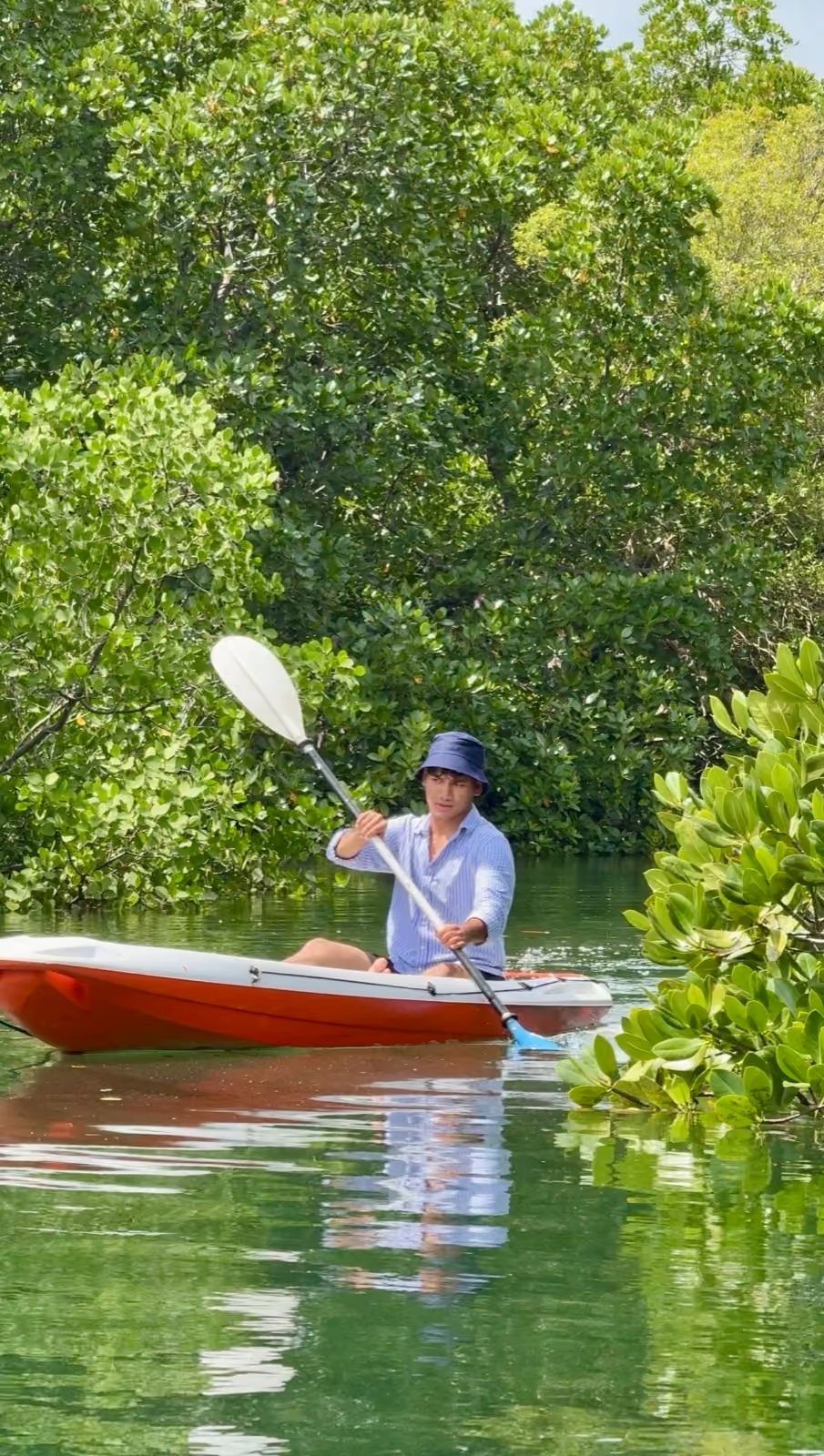
Ngezi Forest on the island’s northern tip is a rare surviving patch of the forest that once covered Pemba, home to the Pemba flying fox, the Pemba scops owl and red colobus. Then the mangroves, the nursery of the reef. Do one, do both, or rest.
Overnight Pemba Island
- Day10
Pemba → Dar es Salaam
A slow last morning, then a stop at a working spice farm, clove, nutmeg and cinnamon growing and drying, on the way to the airstrip. The flight to Dar es Salaam, for your flight home.
Where you’ll stay
The camps on this safari: your tent, the deck and the shared spaces.
All-inclusive, end to end
From the moment we receive you until we drop you back:
- Reception at the airport, and every transfer on the itinerary
- All nights in camp, with all meals
- Bush breakfast and lunch on full days in the field
- Your private vehicle and guiding team throughout
- Park and conservation fees
- Cultural visits on the itinerary
- Binoculars in each vehicle, and first aid on hand
On this safari it also includes the flights from the Serengeti to Pemba and from Pemba to Dar es Salaam, your choice of reef activity on Pemba, and the Hadzabe and Datooga visit.
You won’t spend a penny unless you choose to: drinks at camp, laundry or shopping.
Not included
- Your international flights
- Visas and the Kenya eTA. You can apply yourself, or we can process them for you.
- Travel insurance, now mandatory for Kenya and for Tanzania
- A hotel night in Nairobi or Arusha, if your flight home is the next day
You’ll also need a yellow fever vaccination.
What it costs
Per person, in US dollars, sharing a room or tent. Minimum two travellers.
| Trips starting | 2 travellers | 4 or more |
|---|---|---|
| 21 Feb – 30 Jun · 25 Aug – 19 Dec | USD 8,500per person | USD 7,500per person |
| 1 Jul – 24 Aug · 20 Dec – 20 Feb | USD 9,000per person | USD 8,000per person |
Rates follow the camps’, the lodge’s and the park authority’s own calendars. The wildlife is there every month.
Questions people ask first.
What does all-inclusive mean?
Everything from the moment we receive you until we drop you back: transfers, camps, all meals, park fees, your private vehicle and guiding team. You won’t spend a penny unless you choose to, on drinks at camp or shopping. The only things outside the price are your flights, visas (including the Kenya eTA) and travel insurance, which is now mandatory for Kenya. We can process visas for you if you’d like.
Is the safari private?
Always. The vehicle and the guiding team are yours alone, and we never put separate parties together. That is what lets us stay with a sighting for as long as it takes.
Who are the guides?
Every safari has a guiding team of at least two: a senior guide and one or two guides working alongside. Our guides know the resident prides individually, and they read the land as well as the animals: the soil, the grass, the water, and why the animals are where they are.
Kenya, Tanzania, or both?
Kenya is the concentrated safari for fewer days: the Mara is compact, rich in resident cats, and easy to reach from Nairobi. Tanzania is the bigger, wilder one, where the guiding matters most and the ecological story is fuller. Together they make one ecosystem, and our Kenya & Tanzania journey covers the whole of it.
When is the best time to come?
Every month has something happening. The lion prides, cheetah, leopard and elephant of the Mara live there all year. The herds are always somewhere on their long loop through the Serengeti and the Mara, so we plan around where they will be. See When to come for the year, month by month.
Can I drive?
In the Serengeti, yes. We run two of our own Land Cruisers there, linked by radio, and you’re welcome to drive one with a guide beside you. Hand it back whenever you’d rather sit back and watch. In the Maasai Mara our guides drive the open game viewer, so everyone’s eyes are free for the bush.
Can we bring children?
Yes, children of every age come on safari with us, and it is a lovely time to introduce them to animals and their worlds. Children under 5 travel free, 5 to 11 are charged at half, and from 12 it’s the adult rate. That isn’t our choice: the camps charge by bed and the park authorities charge entry by age on the passport, so we pass those on as they are.
What about food?
Vegetarian and Jain meals are catered for regularly, and our camp in the Mara uses only halal meat. Our camps are chosen for where the animals are, not for their kitchens: they’ll happily attempt Indian dishes, but the flavours may not taste quite the way they do at home.
How do I book?
Tell us your dates and who is travelling. We check the camp and the guiding roster, then send you the itinerary and exact costing. To confirm, we need the names as they appear on your passports and an address for the invoice. A 25% advance holds your dates and the balance is due 30 days before you travel; within 30 days, full payment confirms. We invoice in US dollars. Bank transfer is preferred, and a card payment link is available with a 3.5% card fee.