

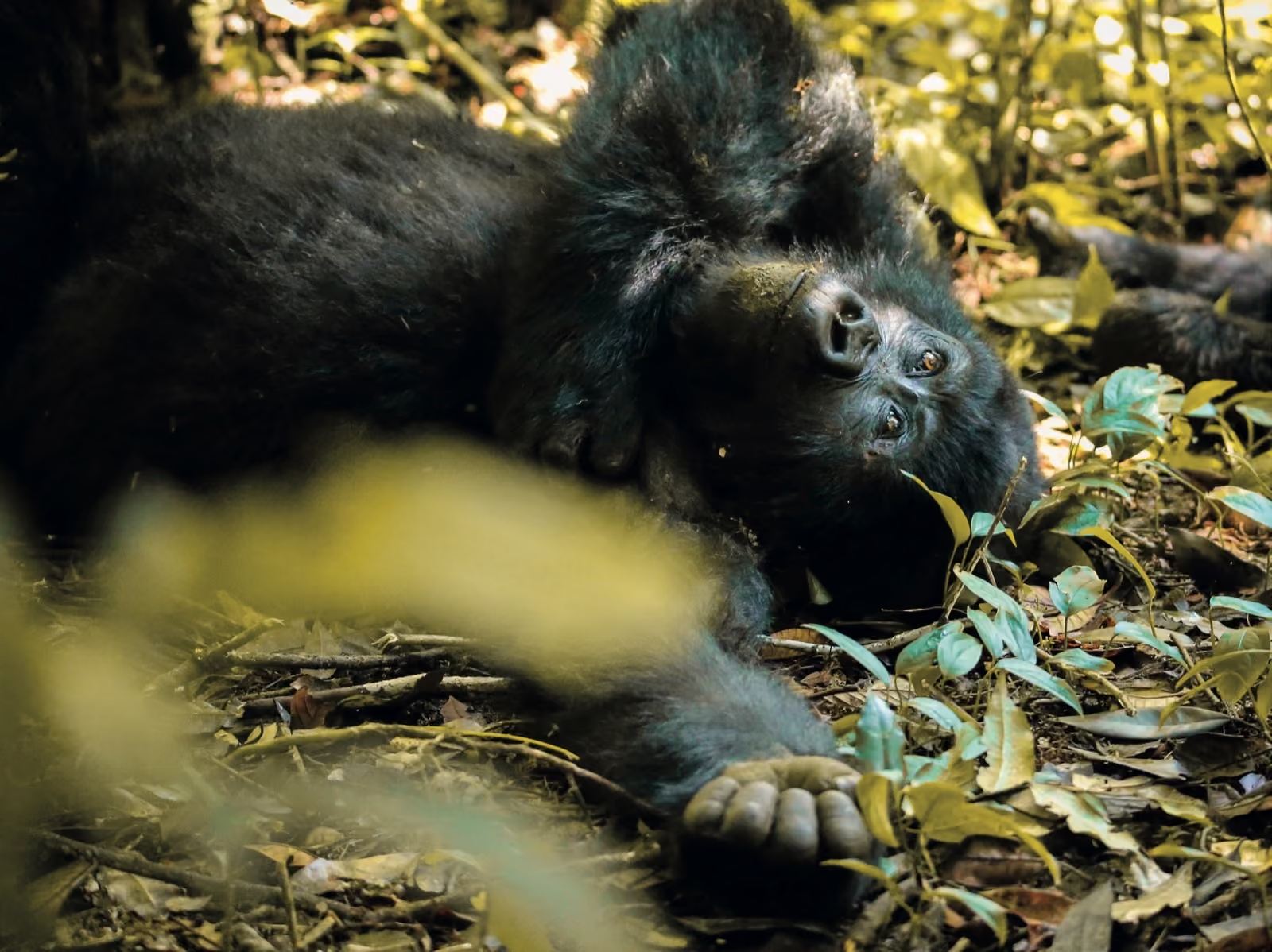
Call of the Canopy
Chimpanzees in Kibale and mountain gorillas in Bwindi, on a guided self-drive through western Uganda.
- Length
- 5 nights · 6 days
- Where
- Kibale National Park and Bwindi Impenetrable National Park, Uganda
- Format
- Guided self-drive, in your own Land Cruiser
- Guiding
- Your WBB guide throughout, with Uganda Wildlife Authority rangers in the forest
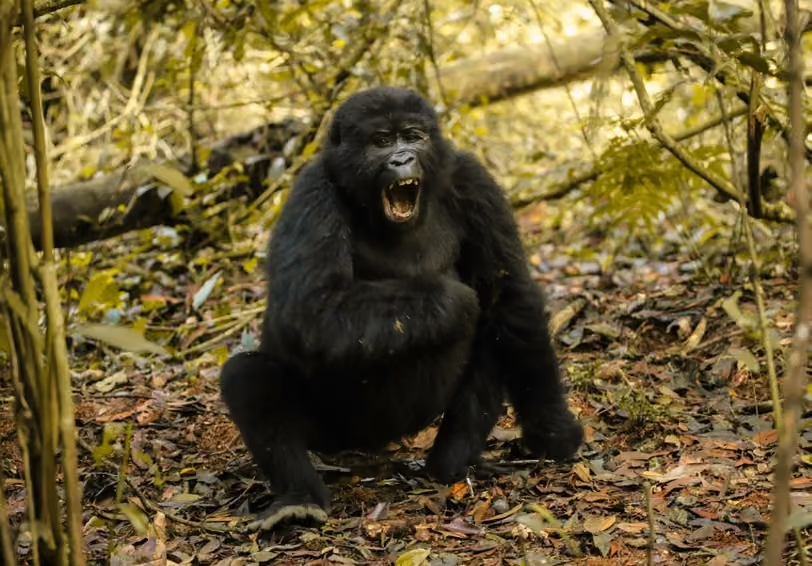
On the plains we read the grass. In the forest we read the trees. Chimpanzees follow the fruit, so you learn which figs are ripening and where; you hear a community long before you see it, the pant-hoots carrying through the canopy and the drumming on the buttress roots. Gorillas leave a trail of their own: each night they build fresh nests, and the trackers set out from the last night’s beds, following bent stems and chewed shoots until the family is there in front of you.
Uganda is where our work in Africa began, in 2019. This is a short, full journey: one morning with the chimpanzees, one with a gorilla family, and the people who lived in this forest long before it was a park.
Not so different from us
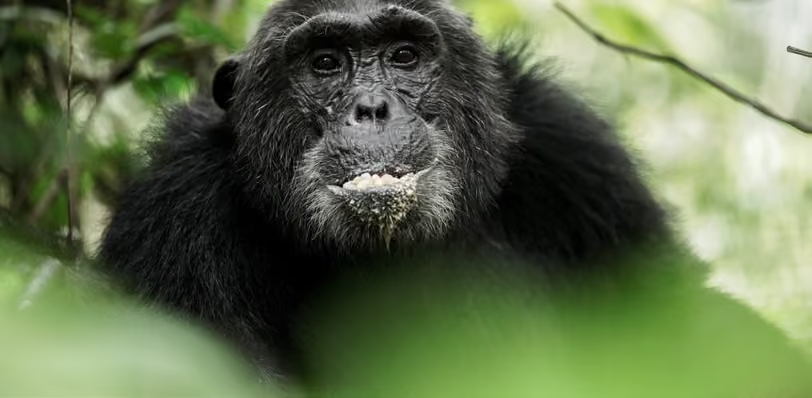
Sit with a chimpanzee community or a gorilla family for an hour and you stop seeing a sighting. You start seeing a family.
- They use tools. Chimpanzees strip twigs to fish for termites and use stones to crack nuts.
- They talk with their faces. A play face, a fear grimace, a calm stare: much of what passes between them is said without a sound.
- They play. The young wrestle, chase and tumble, and that play is how they learn the rules of the group.
- Family comes first. A gorilla family moves around its silverback; a chimpanzee community runs on alliances and old friendships. In both, the young are carried, fed and taught for years.
- They grieve. Chimpanzees and gorillas have been seen staying beside a dead family member for hours, sometimes days.
Guided self-drive: take the wheel, or don’t.
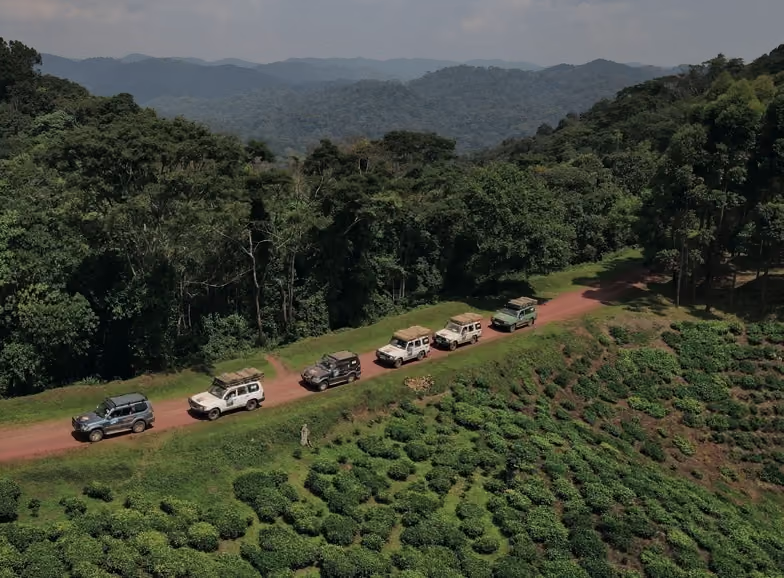
You travel in your own fully equipped Land Cruiser, with your WBB guide beside you. Drive as much or as little as you like: we coach you on the 4x4 sections, and your guide takes over whenever you’d rather watch the country go by. Uganda drives on the left. The roads west are tarmac most of the way, with murram tracks on the last stretch into the forests. Mechanical support is on call throughout.
Would you rather have the vehicle to yourselves? A separate guide vehicle can follow you, at USD 1,000 extra.
The route
Every place you stop or sleep, at its real coordinates. Solid lines are driven.
Day by day: 5 nights, 6 days
- Day01
Entebbe, by Lake Victoria
We receive you at Entebbe International Airport, where you meet your guide and your Land Cruiser. A short drive to a boutique hotel on the shore of Lake Victoria, and an evening to settle in and plan the days ahead together.
Overnight Entebbe
- Day02
West to Kibale
An early start west, with lunch on the way, through farmland and tea country towards the Rwenzori side of the country. We reach Kibale by late afternoon, with time to rest at the lodge and listen to the forest come alive at dusk.
Overnight Kibale
- Day03
Chimpanzees in the morning, then south to Bwindi
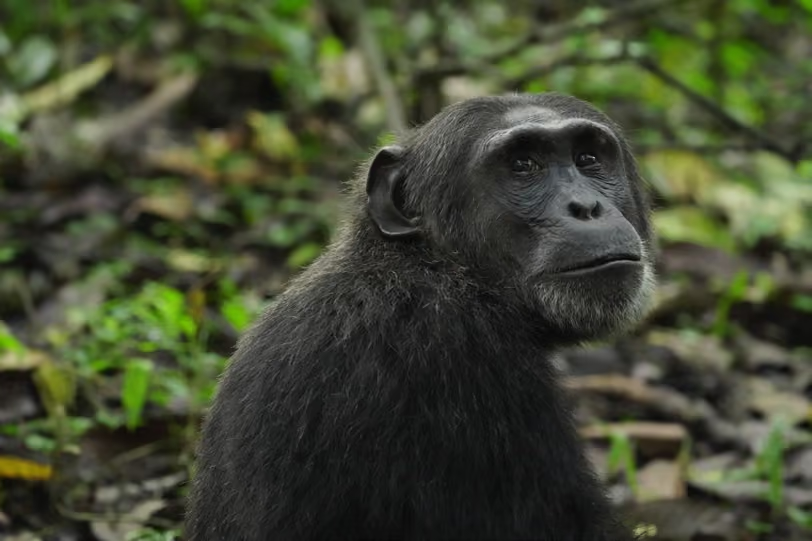
Into the forest early with the rangers, tracking a habituated chimpanzee community by its calls. Kibale holds thirteen primate species, so the walk in is rarely quiet. Back by noon, then the drive south to Bwindi and a tented lodge on the forest edge.
Overnight Bwindi
- Day04
The gorillas, and the Batwa
The morning briefing with the Uganda Wildlife Authority, then into Bwindi with the rangers and trackers to find your gorilla family. The walk can take an hour or most of the day, depending on where the family slept. Once you reach them, you have one hour in their company. If you’re back in time, we spend the afternoon with the Batwa, the forest’s first people. Evening at the lodge.
Overnight Bwindi
- Day05
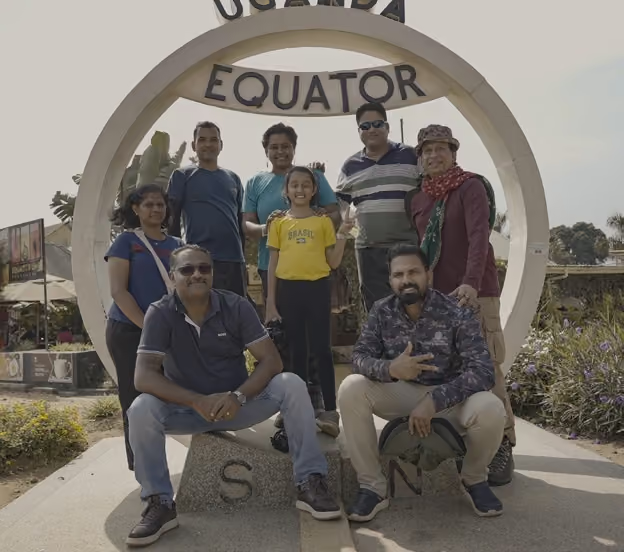
Back east, across the Equator
The longest drive of the trip, broken with a stop on the Equator, where you can stand with a foot in each hemisphere, and a cultural museum on the way if time allows. The night at a lakeside boutique hotel in Entebbe.
Overnight Entebbe
- Day06
Home
A slow breakfast by the lake, then we drop you at Entebbe airport for your flight home.
In the forest
The forest has its own rules, set by the Uganda Wildlife Authority, and we hold to them because they protect the apes:
- Up to eight visitors visit a gorilla family each day, for one hour. In the forest you may trek with other visitors; your vehicle and your guide are yours alone.
- We keep at least 10 metres from the gorillas and wear masks near them. Apes catch our colds and flu, and for them these can be fatal.
- If you’re unwell on the morning of a trek, you can’t go in. That is for the gorillas’ sake, not ours.
- No flash, no eating near the apes, and no touching, even if a young one comes close.
Animals, land and people
The Batwa lived in these forests for generations, as hunters and gatherers. When Bwindi became a national park in 1991, they had to leave it. The park has protected the gorillas, and the Batwa have carried much of its cost. We visit to listen and learn, with no staged performances.
How fit do you need to be?
Moderately fit. Chimpanzee tracking in Kibale is fairly easy walking on forest trails. Gorilla trekking in Bwindi can be hard: steep, uneven and muddy, through dense forest. The gorillas move every day, so the walk to them can be anything from one hour to six each way. A porter from the local community can carry your bag and give you a hand on the steep sections, for about USD 15. Every step is worth it.
All-inclusive, end to end
From the moment we receive you until we drop you back:
- Reception at the airport, and every transfer on the itinerary
- All nights in camp, with all meals
- Bush breakfast and lunch on full days in the field
- Your private vehicle and guiding team throughout
- Park and conservation fees
- Cultural visits on the itinerary
- Binoculars in each vehicle, and first aid on hand
On this safari it also includes your gorilla and chimpanzee permits, your Uganda visa fee, your Land Cruiser with 4x4 coaching and mechanical support, and the Batwa visit.
You won’t spend a penny unless you choose to: drinks at camp, laundry or shopping.
Not included
- Your international flights
- Visas and the Kenya eTA. You can apply yourself, or we can process them for you.
- Travel insurance, now mandatory for Kenya and for Tanzania
- A hotel night in Nairobi or Arusha, if your flight home is the next day
On this safari, diesel is also paid as you go, and soft drinks are not included.
You’ll also need a yellow fever vaccination.
What it costs
Per person, in US dollars, sharing a room or tent. Minimum two travellers. Gorilla and chimpanzee permits are included.
| Trips starting | 2 travellers | 3 or more |
|---|---|---|
| All year | USD 3,999per person | USD 2,999per person |
Gorilla permits are limited and sell out months ahead, so we apply for yours as soon as your dates are confirmed.
Questions people ask first.
What does all-inclusive mean?
Everything from the moment we receive you until we drop you back: transfers, camps, all meals, park fees, your private vehicle and guiding team. You won’t spend a penny unless you choose to, on drinks at camp or shopping. The only things outside the price are your flights, visas (including the Kenya eTA) and travel insurance, which is now mandatory for Kenya. We can process visas for you if you’d like.
Is the safari private?
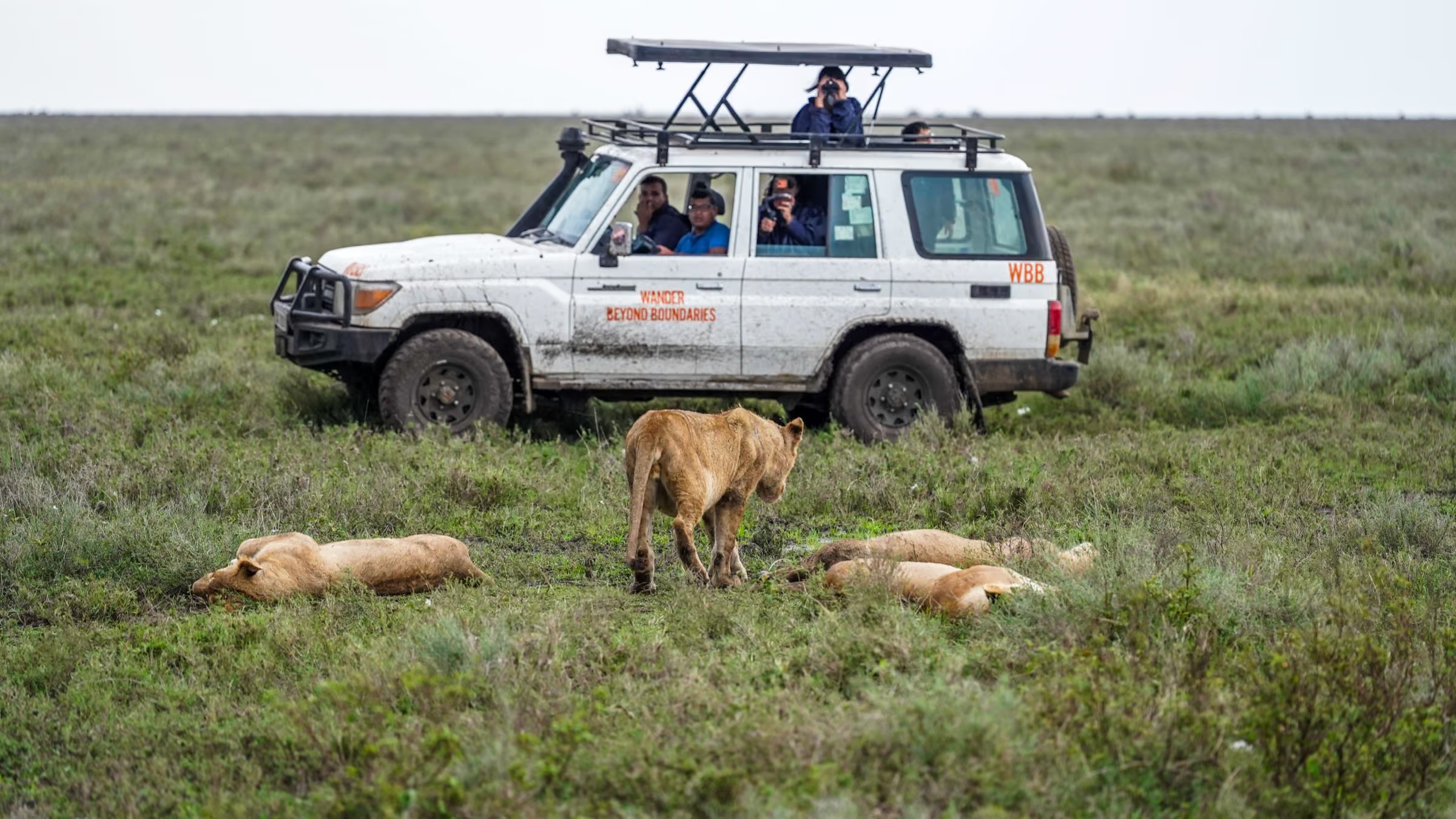
Always. The vehicle and the guiding team are yours alone, and we never put separate parties together. That is what lets us stay with a sighting for as long as it takes.
Who are the guides?
Every safari has a guiding team of at least two: a senior guide and one or two guides working alongside. Our guides know the resident prides individually, and they read the land as well as the animals: the soil, the grass, the water, and why the animals are where they are.
Kenya, Tanzania, or both?
Kenya is the concentrated safari for fewer days: the Mara is compact, rich in resident cats, and easy to reach from Nairobi. Tanzania is the bigger, wilder one, where the guiding matters most and the ecological story is fuller. Together they make one ecosystem, and our Kenya & Tanzania journey covers the whole of it.
And Uganda?
Uganda is a different ecosystem, and a different safari: rainforest rather than grassland, apes rather than big cats. Call of the Canopy spends a morning with chimpanzees in Kibale and a morning with a gorilla family in Bwindi, five nights from Entebbe. It works well on its own, or before or after a safari in Kenya.
When is the best time to come?
Every month has something happening. The lion prides, cheetah, leopard and elephant of the Mara live there all year. The herds are always somewhere on their long loop through the Serengeti and the Mara, so we plan around where they will be. See When to come for the year, month by month.
Can I drive?
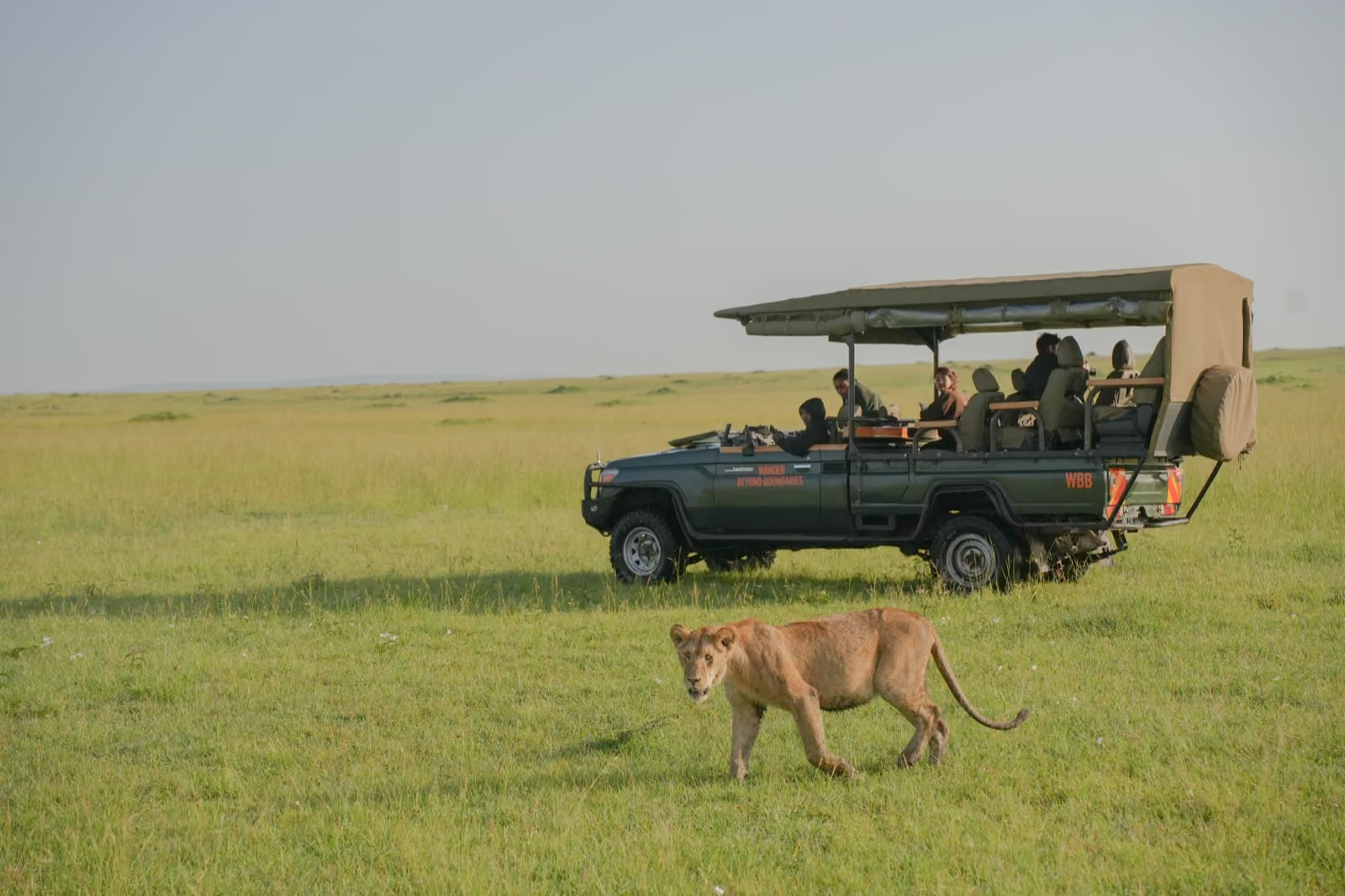
In the Serengeti and in Uganda, yes. In the Serengeti we run two of our own Land Cruisers there, linked by radio; in Uganda you have your own Land Cruiser with your guide beside you. Either way, you’re welcome to drive and hand it back whenever you’d rather sit back and watch. In the Maasai Mara our guides drive the open game viewer, so everyone’s eyes are free for the bush.
Can we bring children?
Yes, children of every age come on safari with us, and it is a lovely time to introduce them to animals and their worlds. Children under 5 travel free, 5 to 11 are charged at half, and from 12 it’s the adult rate. That isn’t our choice: the camps charge by bed and the park authorities charge entry by age on the passport, so we pass those on as they are. In Uganda, the Uganda Wildlife Authority sets the minimum ages in the forest: 15 for gorilla trekking, with a separate minimum for chimpanzee tracking, checked against passports on the morning.
What about food?
Vegetarian and Jain meals are catered for regularly, and our camp in the Mara uses only halal meat. Our camps are chosen for where the animals are, not for their kitchens: they’ll happily attempt Indian dishes, but the flavours may not taste quite the way they do at home.
How do I book?
Tell us your dates and who is travelling. We check the camp and the guiding roster, then send you the itinerary and exact costing. To confirm, we need the names as they appear on your passports and an address for the invoice. A 25% advance holds your dates and the balance is due 30 days before you travel; within 30 days, full payment confirms. We invoice in US dollars. Bank transfer is preferred, and a card payment link is available with a 3.5% card fee.